
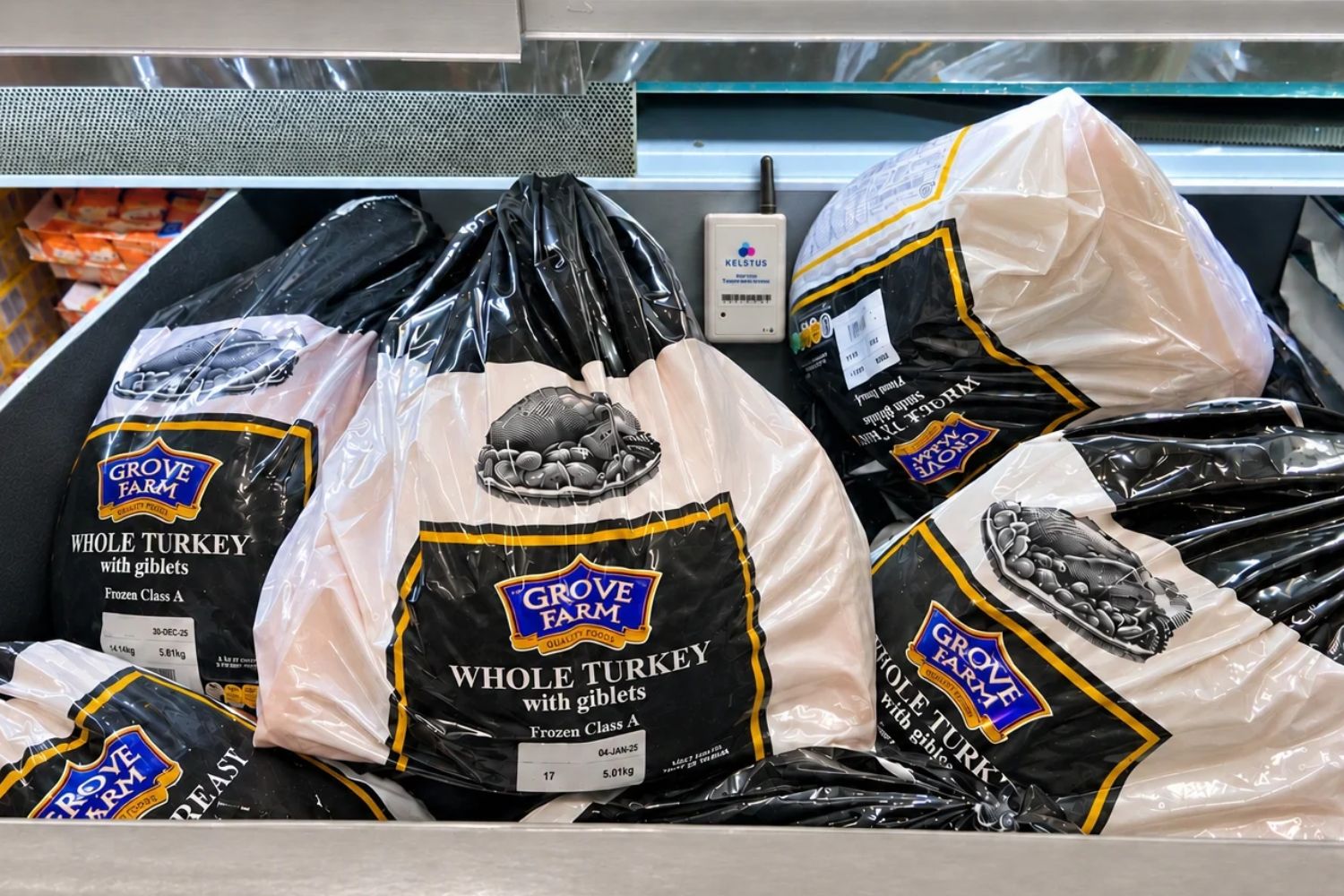
Behind every chilled display, deli counter and freezer cabinet are people working to maintain standards, support colleagues and protect customers. During the festive trading period, that responsibility becomes more demanding as deliveries increase, stock levels rise and teams balance food safety with customer service.
With employment and operating costs adding pressure, retailers need practical ways to maintain oversight while making the best use of staff time.
“Temperature control remains a central part of that responsibility”, says Dylan Doherty, Territory Manager with wireless temperature monitoring and digital HACCP provider Kelsius. He continues: “The Food Safety Authority of Ireland guidance advises that refrigeration should keep food between 0°C and 5°C, while freezers should generally operate at −18°C or colder. Specific products may require different conditions.”
Monitoring storage temperatures helps identify changes, while appropriate food temperature checks remain necessary. When readings fall outside required limits, staff must investigate, assess affected food and record corrective action. Reliable records support continuity between shifts and provide evidence for inspections.
Recent cyberattacks affecting supermarket refrigeration systems in France, where compromised controls caused units to heat up and stock to spoil, have also highlighted the value of independent temperature monitoring. Sensors operating separately from refrigeration controls can provide an additional check on actual storage conditions and alert staff to rising temperatures. This adds a layer of oversight alongside equipment maintenance and cybersecurity measures.
According to Dylan, “Digital systems can help ease that burden. Wireless sensors record fridge and freezer temperatures at defined intervals, providing visibility between manual checks and outside opening hours.” Dylan points out that if configured thresholds are breached, alerts can reach designated staff, supporting an earlier response to developing problems.
That visibility is particularly valuable when stores hold additional festive stock overnight or managers oversee several locations. With thousands of euro worth of food potentially held in fridges and freezers, early alerts can give staff time to act before stock spoils, helping retailers avoid significant losses during peak festive trading. It also helps colleagues who are taking over a shift to understand any temperature issues and the actions already taken.
Digital HACCP tools support daily routines too. Task prompts help coordinate scheduled checks, while Bluetooth probes transfer food temperature readings directly into digital records. Keeping information together reduces time spent transcribing readings, locating paperwork and preparing for inspections.
Need autuomated monitoring system to protect valuable stock day and night, seven days a week? Contact Kelsius today.
