Ardingly College uses FoodCheck 2.0 from Kelsius: “…alerts help protect us from costly stock losses…it gives us real peace of mind…”

Ardingly College is a leading independent school in West Sussex, providing education and pastoral care for a large pupil community. The College operates a high-volume catering operation delivering daily meals for pupils alongside front-of-house hospitality for events, summer programmes, and visitors. Food safety, due diligence, and consistency are central to the catering team’s responsibilities.

The Challenge

Food safety management at Ardingly College previously relied on paper-based HACCP systems. This created a significant administrative burden, with multiple folders and binders requiring constant updating.

Paperwork frequently became damaged or incomplete in kitchen environments, and missing sheets caused frustration during inspections. Paper processes also created risk around record integrity during busy service periods, with limited assurance that checks were completed correctly and at the right time.

In addition, refrigeration failures during weekends or holiday closures had previously resulted in significant stock losses before issues were identified. The College required a more reliable, audit-ready system that reduced risk, saved time, and strengthened due diligence.

The Solution

Ardingly College looked to Kelsius’ FoodCheck 2.0 solution to reduce the administrative workload and paperwork, improve compliance and inspective preparation, and reduce time spent on food safety procedures and manual checks.

Results

Results achieved using FoodCheck 2.0 included:

  • Around two hours saved per day.
  • Paper records eliminated.
  • Reduced reliance on manual checks with 24/7 automated fridge and freezer monitoring.
  • Stock loss prevented thanks to early alerts.
  • Weekly compliance reporting consolidated into a single digital summary.
  • Improved EHO confidence.

Kelsius has become a core part of daily operations at Ardingly College, delivering stronger audit readiness, improved accountability, reduced waste risk, and greater confidence that food safety standards are being upheld consistently across the catering operation.


With Kelsius, Conference Aston & Wilson Vale transform food safety culture and go fully digital

Conference Aston is Birmingham’s only residential conference centre, located on the Aston University campus. The venue operates a single kitchen serving hotel guests, delegates and private events. With a focus on delivering high-quality, safe catering experiences, Conference Aston combines hospitality excellence with modern operational management.

Managing food safety across a large hospitality venue with a single kitchen was becoming increasingly complex. Conference Aston relied on paper-based HACCP records, which could be time-consuming, inconsistent and prone to human error or falsification. Chefs used to spend hours photocopying and filing paperwork.

Audits could be slow with record-keeping traceability time-consuming to trace when issues arose. The leadership recognised the need for a modern, digital solution to standardise checks, ensure accuracy, and provide instant access to compliance data across all catering operations.

With the introduction of FoodCheck 2.0 from Kelsius, the Executive Head Chef has been able to tailor the system’s tasks and workflows to match existing operations, adding checks for deliveries, cleaning, and equipment monitoring. The platform’s flexibility allows new tasks, users and schedules to be added instantly, ensuring the system always reflects current operational needs.

Conference Aston and Wilson Vale have transformed their food safety culture by moving from paper to a fully digital, automated process. The team now saves five hours each week, operates more sustainably, and has complete confidence in compliance and traceability. The Kelsius FoodCheck 2.0 system has become integral to daily operations, helping Conference Aston deliver the highest standards of food safety, quality and guest assurance.


Beyond Compliance: Why Automated Temperature Monitoring Is Critical for Transporting Food and Healthcare Products

In today’s global supply chains, moving temperature-sensitive products – from fresh produce to medicines – is both a logistical necessity and a growing challenge. With rising demand for perishable food products, increased healthcare transportation requirements, and stricter regulatory standards, precise temperature control must be maintained throughout transportation. Failure to do so carries not just financial risk but also public health consequences. 

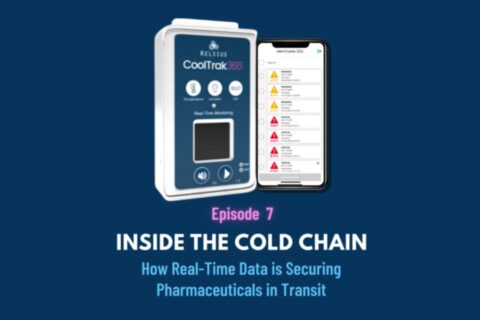
The recent launch by Kelsius of FoodTrak365 and CoolTrak365 underscores a fundamental shift: businesses must adopt automated, real-time temperature monitoring solutions to protect products, ensure compliance, and minimise waste. 

This article explores why automating temperature monitoring in transit matters more than ever. We look at economic losses from temperature excursions, examples of cold chain failures caused by manual error or unexpected events, and the scale of temperature-controlled transport markets that depend on real-time visibility. 


The Scale of Temperature-Sensitive Transport 

Temperature-controlled logistics, often referred to as the cold chain, is a significant and rapidly expanding segment of global supply chains. 

The global cold chain logistics market was valued at around USD393.2 billion in 2025 and is forecast to grow to approximately USD1,632.6 billion by 2035, expanding more than fourfold in just a decade. This growth reflects rising consumer demand for fresh food year-round and the expanding distribution of temperature-sensitive pharmaceuticals and biological products. Transportation services alone are expected to account for nearly 45% of cold chain logistics demand by 2025.1 

More locally, the UK and Europe are experiencing similar trends: up to 30% of all food produced in Europe requires cold chain logistics due to perishability and quality standards.2  

In short, billions of dollars’ worth of goods are in motion every day that require tight temperature controls, and transportation is the most vulnerable segment of that journey. 


How Much Product Is Lost Without Reliable Temperature Control? 

The cost of temperature excursions is already affecting businesses on a massive scale. 

A key finding from international health authorities is that up to 50% of vaccines are wasted globally each year because of inadequate temperature control, logistics, and shipment issues.3 This staggering loss represents billions in product value, compromised public health outcomes, and wasted human effort. 

Across broader cold chains, it is estimated that temperature-control failures contribute to roughly 526 million tonnes of food lost annually, equivalent to nearly 13% of all food produced worldwide. When accounting for disposal, logistics, compliance breaches, and opportunity costs, this loss is estimated at a value approaching USD1 trillion every year.4 

In the pharmaceutical sector, cold chain failures can affect the journey at any stage, with the most common issues arising due to temperature fluctuations, exposure to extreme environmental conditions, delayed transport, and handling errors. It is estimated that 12% of pharmaceutical shipments experience temperature excursions.5 Even minor excursions of just a few degrees can degrade products such as monoclonal antibodies, insulin, and mRNA-based vaccines, rendering them unsafe or ineffective.  

These figures show that temperature instability is one of the most wasteful weaknesses in current logistics systems. 


Real-World Costs of Manual Error and Oversights 

Cold chain systems are complex, involving multiple handovers, storage environments, and shifting external conditions. Each transition point – loading docks, vehicle transfers, unloading at destination – introduces risk. 

Human error alone is a frequent contributor to cold chain failures. A study by the Georgia Institute of Technology estimated that up to 90% of such failures resulted from human error.6  

Lapses such as these and related issues lead to costly spoilage events: 

  • The pharmaceutical industry loses approximately USD35 billion in products per year because of failures in temperature-controlled logistics – the vast majority of which are preventable.7 
  • In food logistics, breaks in the cold chain – from simple temperature fluctuations to prolonged exposure outside optimal ranges – are a major contributor to global food loss and waste, particularly for perishable goods such as dairy, meat, fruits and vegetables.8  
  • Weather-related transit delays, refrigeration unit failures, or oversight during customs processing have also been directly linked to cold chain breaches that resulted in waste and regulatory non-compliance.5  

Across industries, these incidents demonstrate that temperature checks and retrospective documentation can record damage that occurs but not prevent it.  


Why Automation and Real-Time Monitoring Matters 

Automated temperature monitoring transforms logistics from reactive to proactive. Instead of waiting for inspections or manual log entries at checkpoints, connected sensors offer continuous, real-time data throughout the transport lifecycle. 

This capability has several crucial benefits: 

  • Immediate Alerts: Automated systems notify logistics teams instantly when temperatures deviate, allowing corrective action before products are compromised. 
  • Audit Trail for Compliance: Digital records provide tamper-proof documentation for regulators and quality auditors in food safety (HACCP) and healthcare (GDP) environments. 
  • Reduced Human Error: By removing manual logging, automated systems reduce the risk of inaccurate entries, missed checks, or unreported excursions. 
  • Enhanced Visibility: Integrated dashboards often allow end-to-end tracking, giving stakeholders visibility into every stage of the supply chain. 
  • Predictive Insights: Over time, data from temperature monitoring can reveal patterns, enabling companies to refine routes, optimise refrigeration, and prevent recurring issues. 


Automated Monitoring in Practice: Food and Healthcare Logistics 

In food logistics, products like fresh produce, dairy, and prepared meals are highly sensitive to temperature swings. Even brief excursions can accelerate spoilage, deteriorate quality, and promote bacterial growth. Automated tracking helps ensure these goods remain in specified temperature ranges until they reach retail shelves or restaurant kitchens. 

In medical logistics, vaccines and biological products often require ultra-precise temperature ranges – some as low as -70°C for mRNA vaccines – to maintain efficacy. Vaccines are particularly delicate biological substances that will have reduced or lost efficacy if they are frozen, if stored above +8°C, or if exposed to direct sunlight or ultraviolet light (UV).9 

Across both sectors, the margin for error is shrinking as products become more specialised and regulations more stringent. 


Temperature Monitoring that meets consumers’ demands and regulators’ standards  

The sheer volume and value of temperature-controlled goods in global transport illustrate a critical truth: maintaining temperature integrity in transit is central to modern supply chains. With up to half of all vaccines wasted, hundreds of millions of tonnes of food lost, and billions of dollars in global economic impact, the risks of cold chain failure are too high to ignore. 

Automated temperature monitoring solutions like FoodTrak365 and CoolTrak365 are not just technological upgrades, they are strategic necessities for businesses that handle temperature-sensitive products. By delivering real-time visibility, reducing risk, and strengthening compliance, these systems directly address the root causes of product loss and supply chain inefficiency. 

In a world where supply chains are complex, consumers demand quality and regulators expect accountability, automation is the best defence against waste, loss, and reputational risk in temperature-sensitive transport. 


Sources 

  1. Fact MR‘Food Cold Chain Logistics Market Forecast and Outlook 2025 to 2035’, https://www.factmr.com/report/food-cold-chain-logistics-market 
  2. Market Data Forecast, ‘Europe Refrigerated Transport Marketing, June 2025’, https://www.marketdataforecast.com/market-reports/europe-refrigerated-transport-market 
  3. World Health Organization, ‘Monitoring Vaccine Wastage at Country Level – Guidelines for Programme Managers’, https://iris.who.int/server/api/core/bitstreams/bf88e08d-273b-48df-93b7-a1d7cb9ac02a/content  
  4. Sustainable Energy for All, ‘Cooling for Food, Nutrition and Agriculture’, https://titancontainers.ie/news/the-true-cost-of-cold-storage-failures  
  5. Cargo Forwarder Global, ‘What Happens When the Cold Chain Breaks?’, https://cargoforwarder.eu/2025/11/23/what-happens-when-the-cold-chain-breaks/  
  6. BioPharma International, ‘Challenges in Managing the Cold Chain’, https://www.biopharminternational.com/view/challenges-managing-cold-chain-0  
  7. SupplyChainBrain, ‘Pharma Supply Chain Failure is a $35 Billion Problem’, https://www.supplychainbrain.com/blogs/1-think-tank/post/35071-the-35-billion-challenge-using-supply-chain-intelligence-to-improve-pharma-operations  
  8. UNEP and FAO. 2022, ‘Sustainable Food Cold Chains: Opportunities, Challenges and the Way Forward’. Nairobi, UNEP and Rome, FAO. https://doi.org/10.4060/cc0923en  
  9. Health Service Executive, ‘HSE Guidelines for Maintaining the Vaccine Cold-Chain in Vaccine Cool Boxes’, https://www.hse.ie/eng/health/immunisation/hcpinfo/vaccineordering/sopnio02box.pdf  

Kelsius Shortlisted in Technology Category at the Guaranteed Irish Business Awards

Kelsius is delighted to have been shortlisted as a finalist in the upcoming Guaranteed Irish Business Awards. 

Kelsius has been named as a finalist in the Technology category. The recognition is timely as Kelsius has just announced its new innovations in technology, with the launch of FoodTrak365 and CoolTrak365 for temperature monitoring for goods in transit.  The new products add to Kelsius’ suite of monitoring systems for the food and healthcare industries which allow businesses to reduce costs, improve compliance, protect stock, and save staff time by introducing automation and removing manual processes.

The Guaranteed Irish Business Awards recognise Irish businesses and organisations that invest in long-term employment, strengthen local communities, and deliver trusted, high-quality products and solutions. At Kelsius, these principles are part of how the company operates, from designing and manufacturing products in Donegal to partnering with Irish suppliers, helping drive economic growth at both a local and national level.

Commenting on the announcement of finalists, Guaranteed Irish CEO Bríd O’ Connell said, “It is more important than ever to recognise and support the companies driving progress here in Ireland, businesses whose ambition, creativity, and commitment benefit not just their industries, but the wider Irish economy and communities they serve.” 

The awards are judged by an independent panel of industry leaders, including representatives from Matheson, An Post, Musgrave, PTSB, Viatel Technology Group and FBD Insurance.

Winners will be announced at the Guaranteed Irish Business Awards ceremony which will take place in a new venue, the Dublin Royal Convention Centre on 5 March.

For more, visit https://www.guaranteedirish.ie/giba-shortlist/

Kelsius Unveils Two Ground-Breaking Cold Chain Monitoring Solutions for Food and Healthcare: FoodTrak365 and CoolTrak365

Kelsius, a global leader in automated, digital temperature monitoring and cold chain traceability, has announced the launch of two innovative products designed to revolutionise how businesses monitor temperature-sensitive goods while in transit:
FoodTrak365 and CoolTrak365.  

The new, innovative products deliver real-time, end-to-end visibility of temperature and geolocation for goods on the move, helping food and healthcare businesses to protect quality, ensure compliance, reduce waste, and enhance operational efficiency around the clock.  

With increasing demands on supply chain integrity across industries where temperature control is essential for product quality but also legally mandated, Kelsius’s latest solutions meet a critical need for in-transit monitoring. Both solutions build on Kelsius’s established cold chain expertise and cloud-based technologies, bringing businesses unprecedented monitoring precision at every stage of production and supply.  


FoodTrak365: Protecting Freshness for Food Supply Chains 

FoodTrak365 provides food businesses with a powerful digital platform to continuously monitor the temperatures of food products as they move from origin to destination. It replaces outdated, manual logging procedures with a fully automated, paperless solution that gives stakeholders real-time alerts and complete oversight of environmental conditions en route. 

Key features of FoodTrak365 include: 

  • Real-Time Temperature and Alert Notifications: Continuous monitoring with immediate alerts when temperature thresholds are exceeded, allowing corrective action before product quality is compromised. 
  • GPS Shipment Tracking: Integrated geolocation provides visibility of shipment location and environmental status simultaneously, boosting logistical efficiency and supply chain reliability.  
  • Highest Accuracy Monitoring: Industry-leading precision ensures dependable readings that safeguard freshness and compliance at every stage of transit. 
  • Detailed Reporting Suite: Automatically generated digital reports facilitate compliance, quality assurance, and data-driven decision making with minimal human effort. 
  • AI-Driven True Temperature Algorithms: Advanced simulation technology ensures accurate temperature reporting regardless of ambient fluctuations.  

FoodTrak365 helps food businesses to drastically reduce product rejections and spoilage and helps them to uphold their OTIF (on-time, in-full) delivery commitments. At the same time, they are reducing food waste and the environmental impact across the cold chain.  

CoolTrak365: End-to-End Cold Chain Assurance for Healthcare 

Designed specifically for the unique needs of healthcare logistics, CoolTrak365 supports comprehensive temperature oversight of medicines, vaccines, and other time- and temperature-sensitive medical products while in transit. From manufacturing facilities to clinical destinations, this unique solution provides continuous visibility, robust regulatory reporting, and unmatched confidence for healthcare providers and pharmaceutical distributors. 

Standout aspects of CoolTrak365 include: 

  • Real-Time Excursion Alerts & Monitoring: Ensures temperature deviations are detected instantly, empowering staff to act swiftly to protect product safety.  
  • Regulatory Compliance: Aligns with GxP standards and complies with stringent HPRA, MHRA and industry expectations for traceability and audit readiness.  
  • High-Accuracy GPS and Temperature Tracking: Monitors location and temperature of medical products with precision, enabling strategic logistics planning and supply chain transparency.  
  • Automated Upload and Reporting: Eliminates manual record-keeping errors and accelerates operational workflows with automated data uploads.  
  • Customisable Dashboards: User-friendly interfaces tailored to business requirements provide clear insights into temperature trends and risk profiles.  

CoolTrak365’s integrated data automation helps healthcare organisations to mitigate risk, streamline audits, and protect valuable products from compromise, loss, or regulatory non-compliance. 


Setting New Standards in Cold Chain Management 

Both FoodTrak365 and CoolTrak365 underscore Kelsius’s commitment to innovation in cold chain monitoring, removing reliance on manual recording while providing powerful digital tools for proactive temperature control. By harnessing real-time data, advanced alert systems, and cloud-based analytics, businesses can safeguard product integrity, support brand trust, and unlock operational efficiencies not possible with traditional monitoring methods.  

Commenting on the launch, Kelsius Chief Commercial Officer Mario Kelly said, “We are delighted to introduce FoodTrak365 and CoolTrak365 as part of the Kelsius mission to provide unmatched cold chain insight and control. These solutions reflect our deep understanding of the challenges in food safety and healthcare product transport, and our commitment is to deliver systems that drive confidence, compliance and sustainability in cold chain operations.” 

To learn more and request a free demonstration, visit www.kelsius.com or contact Kelsius:  

Tel. UK 02045 799 048, Ireland 074 916 2982
Email: sales@kelsius.com 


The Importance of Temperature Monitoring in Healthcare Settings

Maintaining precise and reliable temperature control is a fundamental requirement across modern healthcare. From storing vaccines and reagents to managing sterile instruments and monitoring laboratory environments, temperature stability plays a direct role in patient safety, diagnostic accuracy, and regulatory compliance. As clinical environments become more complex and the demands on healthcare professionals continue to grow, automated temperature monitoring has emerged as a critical tool that supports quality care while reducing risk.

Why Temperature Monitoring Matters

Every healthcare specialty has unique temperature-sensitive assets. In endoscopy and decontamination areas, the integrity of reprocessed instruments depends on controlled storage conditions. In dentistry or podiatry clinics, disinfectants, impression materials, and medications must be maintained within safe ranges. Laboratories require stable temperatures for reagents, incubators, and specimen storage, while nursing teams rely on medication fridges and controlled drugs cabinets that must remain continuously compliant.

Any deviation whether caused by equipment failure, power outages, door-ajar incidents, or environmental fluctuation can compromise both safety and compliance. Manual checks, still common in many settings, cannot provide the continuous oversight required to detect early excursions or prevent avoidable wastage.

Automated monitoring helps close this gap. It provides healthcare teams with 24/7 visibility over critical environments, reduces the burden of manual documentation, and ensures that clinical decisions are supported by accurate, audit-ready data.

A Trusted Innovator in Healthcare Monitoring

Providers such as Kelsius provide wireless temperature monitoring and digital task management, all in one system. Kelsius’ solutions are widely deployed across hospitals, laboratories, pharmacies, and specialist clinical units in over 50 countries. The company’s R&D-driven approach, combined with a strong focus on compliance and sustainability, has made it a trusted partner for organisations seeking dependable monitoring systems.

Accreditations such as ISO 9001:2015 and ISO 14001:2015, alongside adherence to ISO 27001 information security requirements and FDA 21 CFR Part 11, signal a commitment to quality and robust data governance.

The Kelsius system – CoolCheck – is relied upon by healthcare organisations that demand stringent oversight and evidence-based traceability. Institutions such as Abbott Labs, Baxter, Roche Diagnostics, Eurofins, HSE Ireland, and multiple NHS Trusts use Kelsius monitoring to protect samples, medicines, and sterile supplies. Their applications range from GMP storage and aseptic units to large-scale warehouse monitoring and multi-site pharmacy operations.

Automated Monitoring Through CoolCheck

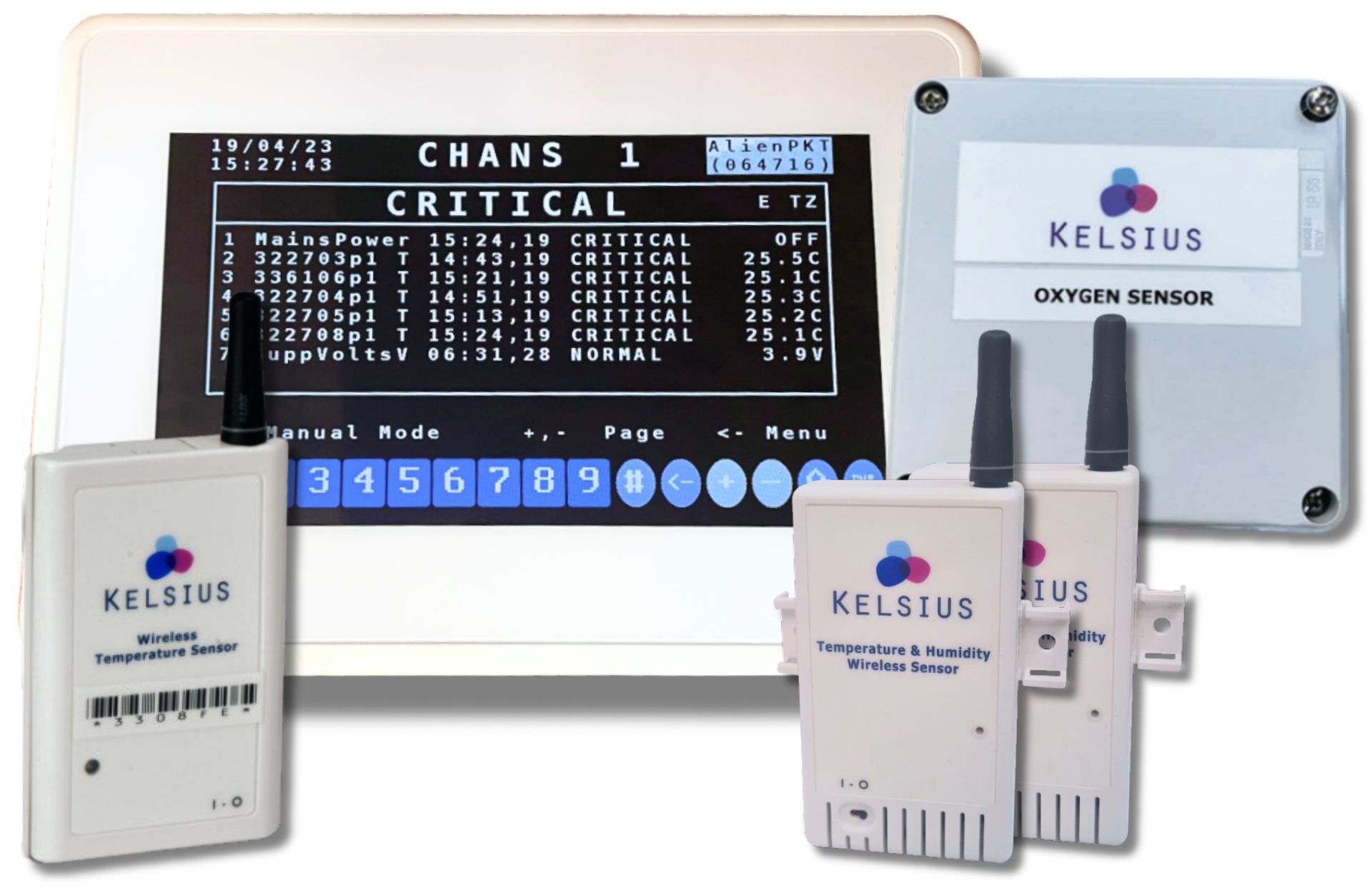
CoolCheck is designed to support the controlled environments found across healthcare. Its flexibility allows it to serve multiple sectors, from endoscopy to IPC and lab sciences. Wireless sensors placed in fridges, freezers, incubators, cryogenic tanks, or cleanroom spaces transmit data securely to the cloud, giving clinicians immediate access to real-time and historical information.

Instant alerts notify teams when thresholds are breached, ensuring rapid intervention and reducing the risk of sample loss or equipment downtime. All measurements and corrective actions are stored in a comprehensive audit trail, which simplifies inspections and reduces administrative workload. For teams managing diverse clinical processes, the system offers optional humidity, O₂, CO₂, or door-ajar monitoring, as well as the ability to support in-house mapping for specialised or high-risk areas.

How Automated Monitoring Supports Healthcare Teams

  1. Patient Safety and Infection Control
    Proper temperature maintenance is essential to prevent bacterial growth, preserve sterility, and maintain material integrity. Automated systems help protect patients by ensuring that devices, medications, and biological materials remain within certified ranges.
  2. Audit Readiness and Regulatory Assurance
    Healthcare environments face rigorous audits and local governance frameworks. Automated logs ensure that documentation is accurate, complete, and always ready for inspection.
  3. Efficiency and Workforce Productivity
    Manual checks can consume valuable clinical time. Automated monitoring reduces administrative burdens and frees staff to focus on patient care and laboratory accuracy.
  4. Incident Investigation and Traceability
    Access to historical temperature trends allows teams to quickly trace root causes following equipment failures, ensuring informed decision-making and improved risk mitigation.
  5. Scalable Monitoring Across Sites
    Whether overseeing a single fridge or managing multiple departments, sensors are easy to deploy and system dashboards offer remote visibility across locations.
  6. Minimising Waste and Supporting Sustainability
    Reducing the loss of high-value reagents, vaccines, or sterile stock helps protect budgets and reduce environmental impact. Automated monitoring also eliminates paper-based record keeping.
  7. Building Resilience and Reducing Risk
    Early detection of temperature deviations enables proactive response. This reduces the likelihood of compromised stock, service disruption, or cancelled procedures.

Supporting Modern Clinical Practice

In fast-paced healthcare environments, temperature monitoring is an essential safeguard. Automated systems help professionals uphold the highest standards of safety, compliance, and operational efficiency. As healthcare continues to advance, the ability to maintain controlled environments reliably will remain a cornerstone of quality care.


For more information visit www.kelsius.com.

Eastern Education Group Transforms Food Safety Across Seven Schools

Managing food safety across multiple school sites is no small task – especially when each kitchen serves pupils with special educational needs, where safety, consistency, and compliance are paramount.

For Eastern Education Group, which operates seven schools across Suffolk and Norfolk, paper-based food safety records were slowing things down. Staff spent valuable time completing manual checks, and managers were driving between schools just to collect paperwork. Weekly audits were time-consuming, and paper records left room for human error or even falsification.

Moving from Paper to Digital Confidence

In 2023, EEG SEND introduced the Kelsius FoodCheck 2.0 digital food safety system across its in-house catering kitchens. The rollout was carefully planned around school schedules, allowing staff to learn the system with minimal disruption. Training was simple and quick – most users preferred it to the old paper methods within days.

Today, audits that once took hours are done remotely in minutes. Management receive automated weekly reports, saving around three to four hours per week, while school catering teams save 30-40 minutes a day on checks.

Measurable Results

  • Instant oversight across multiple schools
  • Paper falsification eliminated – all records timestamped
  • £300–£400 in stock saved through early freezer alerts
  • EHOs impressed by transparency and ease of digital audits
  • Sustainability gains through reduced paper and ink use

Protecting Pupils and Preventing Waste

For SEND pupils, safeguarding extends to every part of the day including mealtimes. Accurate, digital food safety records give EEG SEND leadership confidence that standards are upheld across every kitchen, every day. When equipment fails, automatic alerts prevent costly food waste and protect supply continuity.

SEND Catering Manager Sarah Stannard commented, “It’s more trustworthy because the information can’t be falsified, it must be done on the day. I can now audit weekly without travelling between sites, saving hours each week. We’ve even saved hundreds of pounds in stock when freezers failed, thanks to instant alerts. I wouldn’t go back to paper.”

A Smarter, Safer, More Sustainable Future

Kelsius FoodCheck 2.0 has become integral to EEG SEND’s catering operations – helping staff work smarter, protecting pupils, and giving managers complete peace of mind.

By going digital, EEG SEND has improved efficiency, compliance, and sustainability – proving that technology and care can go hand in hand in education catering.


Pineapple Events: Putting Food Safety First Across the UK’s Top Attractions

Pineapple Events operates food units inside some of the UK’s busiest attractions, including Thorpe Park, Alton Towers, Madame Tussauds, and Brighton Pier. With diverse menus across multiple sites and a seasonal workforce, ensuring food safety and compliance has always been a priority.

Moving Beyond Paperwork

Before introducing Kelsius FoodCheck 2.0, managers and staff relied on paper-based checks. These were time-consuming, prone to human error, and, as Natalie, Operations Manager at Pineapple Events, explained:

“Paper records are always open to mistakes, and in many businesses, they can be falsified. With Kelsius, everything is timestamped, checks can’t be backdated, and my teams are more engaged because the system is tailored to them. I wouldn’t want to go back to paper.”

For Natalie, the ability to configure checklists to each unit’s specific needs has been a game-changer. Hot food outlets, dessert stands, and fryers all require different checks. With Kelsius, she ensures each tablet is tailored, removing irrelevant “noise” that can disengage staff and simplifying daily routines.

Making Food Safety Simple for Staff

Raj, who manages a unit at Thorpe Park, described the difference the system has made on the ground:

“Using Kelsius is very easy compared to paper. On paper, staff forget and there are no reminders, but with the tablet you get notifications every two hours. It tells us exactly what to do, so even in busy times we don’t miss checks.”

The reminders and user-friendly interface mean staff can stay focused on serving customers, while food safety standards remain consistent.

Real Benefits

Since adopting Kelsius, Pineapple Events has:
• Saved 3 staff hours per day across outlets at Thorpe Park.
• Reduced management audit time by 4 hours per week.
• Improved staff engagement with unit-specific, relevant checklists.
• Gained greater confidence with timestamped, fraud-proof records.

A Commitment to Safety

For Pineapple Events, Kelsius isn’t just about passing inspections. It’s about protecting guests and making compliance simpler for their teams. As Natalie put it:

“First and foremost, food safety is there to prevent someone from getting ill. Anything we can do to protect our customers; we have a responsibility to do. For me, the only way to achieve that consistently is with technology.”


One Stop Leamington Spa uses the Kelsius system to save staff time and get peace of mind

Sunder Sandher is the Business Owner at the One Stop convenience store in Leamington Spa.

In his One Stop store, Sunder replaced manual temperature checks with the Kelsius system that provides a simple, reliable digital workflow that keeps Environmental Health Officer requirements on track.


WATCH – SUNDER SANDHER TALKS ABOUT
THE BENEFITS USING THE KELSIUS SYSTEM


Staff no longer worry about remembering to record every reading because probe temperatures from bake-off are captured instantly in the system, which the team loves. Weekly compliance reports are ready to share at inspection time and helped the business demonstrate top-tier hygiene standards with confidence.

Real-time alerts have also delivered practical wins. Watch as Sunder explains how, during a spell of exceptionally hot weather, the Kelsius system flagged a chiller running warm, prompting a quick fix that brought temperatures back within range and avoided the risk to stock. The result is time saved for staff, clear legal confidence on temperatures, and genuine peace of mind for the Sunder and staff.


Cost savings, no paperwork, reduced stock loss – Nisa Local store in Cornwall enjoys the benefits of FoodCheck2.0 from Kelsius

The Nisa Local store in St Stephen, Cornwall, is a large and busy convenience retailer offering a wide range of food essentials, with chilled and frozen food storage as well as a busy hot food department.

In the past the store relied on a basic thermometer and probe system for food temperature checks. This paper-based process was time-consuming and dependent on staff remembering to complete checks, resulting in extra workload and potential gaps in compliance and traceability.

The store needed a system that would address the gaps that the manual, paper-based system presented.


FoodCheck2.0 transforms food safety for Nisa Local St Stephen

Nisa Local St Stephen implemented the Kelsius FoodCheck2.0 digital HACCP and automated temperature monitoring system. It provides the store team with prompts for required tasks, ensuring temperature checks are never missed. Real-time alerts notify staff of equipment issues instantly, allowing for swift action. Installation was straightforward, and staff quickly adapted to the app-based system.


Immediate benefits delivered for HACCP and food safety

Installing FoodCheck2.0 from Kelsius delivered immediate results for the team at Nisa Local St Stephen:

  • 30–60 minutes saved per day by removing manual data logging.
  • Hundreds of pounds worth of food products saved and food waste reduced thanks to equipment failure alerts.
  • Streamlined audits with all records instantly available for inspectors.
  • A paperless operation with no printer or ink costs.


Reliability and efficiency bring confidence across the store

The Kelsius FoodCheck 2.0 system has been adopted in the Nisa Local store in St Stephen across management and staff.

Staff are confident that they will never miss any issues with fridge, freezer or power failures thanks to the real-time alerts should problems arise. The Kelsius system has saved the store hundreds of pounds in potential food loss and they have reduced waste in terms of food, paper and energy.


Nicola Anstey, Branch Manager, Nisa Local St Stephen, Cornwall

“We absolutely love the system — it’s easy, straightforward, and the prompts are brilliant. We’ve already avoided losing hundreds of pounds worth of stock thanks to instant alerts. Our auditors have been really impressed with the system.”