Ardingly College is a leading independent school in West Sussex, providing education and pastoral care for a large pupil community. The College operates a high-volume catering operation delivering daily meals for pupils alongside front-of-house hospitality for events, summer programmes, and visitors. Food safety, due diligence, and consistency are central to the catering team’s responsibilities.
The Challenge
Food safety management at Ardingly College previously relied on paper-based HACCP systems. This created a significant administrative burden, with multiple folders and binders requiring constant updating.
Paperwork frequently became damaged or incomplete in kitchen environments, and missing sheets caused frustration during inspections. Paper processes also created risk around record integrity during busy service periods, with limited assurance that checks were completed correctly and at the right time.
In addition, refrigeration failures during weekends or holiday closures had previously resulted in significant stock losses before issues were identified. The College required a more reliable, audit-ready system that reduced risk, saved time, and strengthened due diligence.
The Solution
Ardingly College looked to Kelsius’ FoodCheck 2.0 solution to reduce the administrative workload and paperwork, improve compliance and inspective preparation, and reduce time spent on food safety procedures and manual checks.
Results
Results achieved using FoodCheck 2.0 included:
Around two hours saved per day.
Paper records eliminated.
Reduced reliance on manual checks with 24/7 automated fridge and freezer monitoring.
Stock loss prevented thanks to early alerts.
Weekly compliance reporting consolidated into a single digital summary.
Improved EHO confidence.
Kelsius has become a core part of daily operations at Ardingly College, delivering stronger audit readiness, improved accountability, reduced waste risk, and greater confidence that food safety standards are being upheld consistently across the catering operation.
Maintaining precise and reliable temperature control is a fundamental requirement across modern healthcare. From storing vaccines and reagents to managing sterile instruments and monitoring laboratory environments, temperature stability plays a direct role in patient safety, diagnostic accuracy, and regulatory compliance. As clinical environments become more complex and the demands on healthcare professionals continue to grow, automated temperature monitoring has emerged as a critical tool that supports quality care while reducing risk.
Why Temperature Monitoring Matters
Every healthcare specialty has unique temperature-sensitive assets. In endoscopy and decontamination areas, the integrity of reprocessed instruments depends on controlled storage conditions. In dentistry or podiatry clinics, disinfectants, impression materials, and medications must be maintained within safe ranges. Laboratories require stable temperatures for reagents, incubators, and specimen storage, while nursing teams rely on medication fridges and controlled drugs cabinets that must remain continuously compliant.
Any deviation whether caused by equipment failure, power outages, door-ajar incidents, or environmental fluctuation can compromise both safety and compliance. Manual checks, still common in many settings, cannot provide the continuous oversight required to detect early excursions or prevent avoidable wastage.
Automated monitoring helps close this gap. It provides healthcare teams with 24/7 visibility over critical environments, reduces the burden of manual documentation, and ensures that clinical decisions are supported by accurate, audit-ready data.
A Trusted Innovator in Healthcare Monitoring
Providers such as Kelsius provide wireless temperature monitoring and digital task management, all in one system. Kelsius’ solutions are widely deployed across hospitals, laboratories, pharmacies, and specialist clinical units in over 50 countries. The company’s R&D-driven approach, combined with a strong focus on compliance and sustainability, has made it a trusted partner for organisations seeking dependable monitoring systems.
Accreditations such as ISO 9001:2015 and ISO 14001:2015, alongside adherence to ISO 27001 information security requirements and FDA 21 CFR Part 11, signal a commitment to quality and robust data governance.
The Kelsius system – CoolCheck – is relied upon by healthcare organisations that demand stringent oversight and evidence-based traceability. Institutions such as Abbott Labs, Baxter, Roche Diagnostics, Eurofins, HSE Ireland, and multiple NHS Trusts use Kelsius monitoring to protect samples, medicines, and sterile supplies. Their applications range from GMP storage and aseptic units to large-scale warehouse monitoring and multi-site pharmacy operations.
Automated Monitoring Through CoolCheck
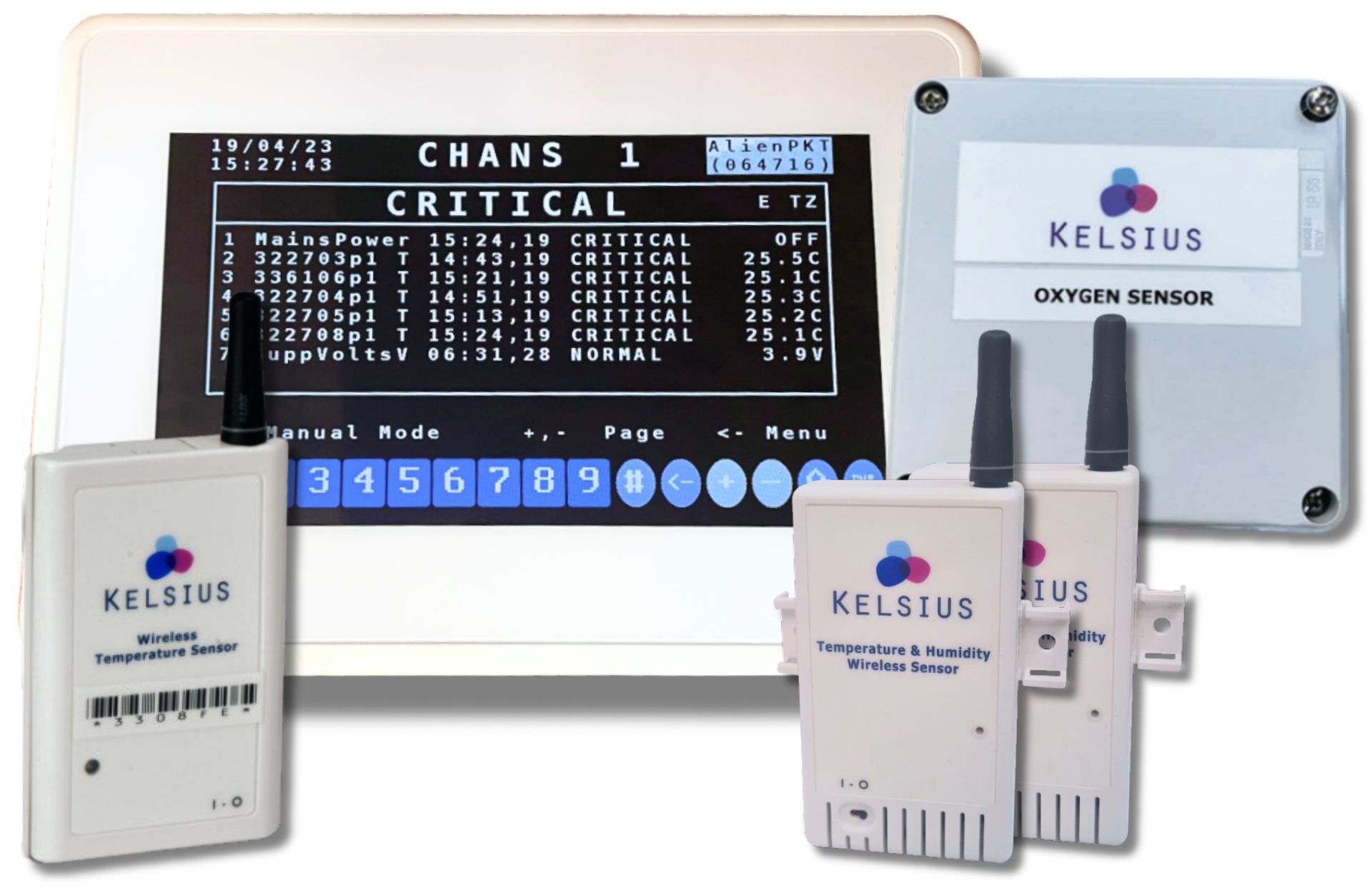
CoolCheck is designed to support the controlled environments found across healthcare. Its flexibility allows it to serve multiple sectors, from endoscopy to IPC and lab sciences. Wireless sensors placed in fridges, freezers, incubators, cryogenic tanks, or cleanroom spaces transmit data securely to the cloud, giving clinicians immediate access to real-time and historical information.
Instant alerts notify teams when thresholds are breached, ensuring rapid intervention and reducing the risk of sample loss or equipment downtime. All measurements and corrective actions are stored in a comprehensive audit trail, which simplifies inspections and reduces administrative workload. For teams managing diverse clinical processes, the system offers optional humidity, O₂, CO₂, or door-ajar monitoring, as well as the ability to support in-house mapping for specialised or high-risk areas.
How Automated Monitoring Supports Healthcare Teams
Patient Safety and Infection Control
Proper temperature maintenance is essential to prevent bacterial growth, preserve sterility, and maintain material integrity. Automated systems help protect patients by ensuring that devices, medications, and biological materials remain within certified ranges.
Audit Readiness and Regulatory Assurance
Healthcare environments face rigorous audits and local governance frameworks. Automated logs ensure that documentation is accurate, complete, and always ready for inspection.
Efficiency and Workforce Productivity
Manual checks can consume valuable clinical time. Automated monitoring reduces administrative burdens and frees staff to focus on patient care and laboratory accuracy.
Incident Investigation and Traceability
Access to historical temperature trends allows teams to quickly trace root causes following equipment failures, ensuring informed decision-making and improved risk mitigation.
Scalable Monitoring Across Sites
Whether overseeing a single fridge or managing multiple departments, sensors are easy to deploy and system dashboards offer remote visibility across locations.
Minimising Waste and Supporting Sustainability
Reducing the loss of high-value reagents, vaccines, or sterile stock helps protect budgets and reduce environmental impact. Automated monitoring also eliminates paper-based record keeping.
Building Resilience and Reducing Risk
Early detection of temperature deviations enables proactive response. This reduces the likelihood of compromised stock, service disruption, or cancelled procedures.
Supporting Modern Clinical Practice
In fast-paced healthcare environments, temperature monitoring is an essential safeguard. Automated systems help professionals uphold the highest standards of safety, compliance, and operational efficiency. As healthcare continues to advance, the ability to maintain controlled environments reliably will remain a cornerstone of quality care.
Managing food safety across multiple school sites is no small task – especially when each kitchen serves pupils with special educational needs, where safety, consistency, and compliance are paramount.
For Eastern Education Group, which operates seven schools across Suffolk and Norfolk, paper-based food safety records were slowing things down. Staff spent valuable time completing manual checks, and managers were driving between schools just to collect paperwork. Weekly audits were time-consuming, and paper records left room for human error or even falsification.
Moving from Paper to Digital Confidence
In 2023, EEG SEND introduced the Kelsius FoodCheck 2.0 digital food safety system across its in-house catering kitchens. The rollout was carefully planned around school schedules, allowing staff to learn the system with minimal disruption. Training was simple and quick – most users preferred it to the old paper methods within days.
Today, audits that once took hours are done remotely in minutes. Management receive automated weekly reports, saving around three to four hours per week, while school catering teams save 30-40 minutes a day on checks.
Measurable Results
Instant oversight across multiple schools
Paper falsification eliminated – all records timestamped
£300–£400 in stock saved through early freezer alerts
EHOs impressed by transparency and ease of digital audits
Sustainability gains through reduced paper and ink use
Protecting Pupils and Preventing Waste
For SEND pupils, safeguarding extends to every part of the day including mealtimes. Accurate, digital food safety records give EEG SEND leadership confidence that standards are upheld across every kitchen, every day. When equipment fails, automatic alerts prevent costly food waste and protect supply continuity.
SEND Catering Manager Sarah Stannard commented, “It’s more trustworthy because the information can’t be falsified, it must be done on the day. I can now audit weekly without travelling between sites, saving hours each week. We’ve even saved hundreds of pounds in stock when freezers failed, thanks to instant alerts. I wouldn’t go back to paper.”
A Smarter, Safer, More Sustainable Future
Kelsius FoodCheck 2.0 has become integral to EEG SEND’s catering operations – helping staff work smarter, protecting pupils, and giving managers complete peace of mind.
By going digital, EEG SEND has improved efficiency, compliance, and sustainability – proving that technology and care can go hand in hand in education catering.
Pineapple Events operates food units inside some of the UK’s busiest attractions, including Thorpe Park, Alton Towers, Madame Tussauds, and Brighton Pier. With diverse menus across multiple sites and a seasonal workforce, ensuring food safety and compliance has always been a priority.
Moving Beyond Paperwork
Before introducing Kelsius FoodCheck 2.0, managers and staff relied on paper-based checks. These were time-consuming, prone to human error, and, as Natalie, Operations Manager at Pineapple Events, explained:
“Paper records are always open to mistakes, and in many businesses, they can be falsified. With Kelsius, everything is timestamped, checks can’t be backdated, and my teams are more engaged because the system is tailored to them. I wouldn’t want to go back to paper.”
For Natalie, the ability to configure checklists to each unit’s specific needs has been a game-changer. Hot food outlets, dessert stands, and fryers all require different checks. With Kelsius, she ensures each tablet is tailored, removing irrelevant “noise” that can disengage staff and simplifying daily routines.
Making Food Safety Simple for Staff
Raj, who manages a unit at Thorpe Park, described the difference the system has made on the ground:
“Using Kelsius is very easy compared to paper. On paper, staff forget and there are no reminders, but with the tablet you get notifications every two hours. It tells us exactly what to do, so even in busy times we don’t miss checks.”
The reminders and user-friendly interface mean staff can stay focused on serving customers, while food safety standards remain consistent.
Real Benefits
Since adopting Kelsius, Pineapple Events has: • Saved 3 staff hours per day across outlets at Thorpe Park. • Reduced management audit time by 4 hours per week. • Improved staff engagement with unit-specific, relevant checklists. • Gained greater confidence with timestamped, fraud-proof records.
A Commitment to Safety
For Pineapple Events, Kelsius isn’t just about passing inspections. It’s about protecting guests and making compliance simpler for their teams. As Natalie put it:
“First and foremost, food safety is there to prevent someone from getting ill. Anything we can do to protect our customers; we have a responsibility to do. For me, the only way to achieve that consistently is with technology.”
The Nisa Local store in St Stephen, Cornwall, is a large and busy convenience retailer offering a wide range of food essentials, with chilled and frozen food storage as well as a busy hot food department.
In the past the store relied on a basic thermometer and probe system for food temperature checks. This paper-based process was time-consuming and dependent on staff remembering to complete checks, resulting in extra workload and potential gaps in compliance and traceability.
The store needed a system that would address the gaps that the manual, paper-based system presented.
FoodCheck2.0 transforms food safety for Nisa Local St Stephen
Nisa Local St Stephen implemented the Kelsius FoodCheck2.0 digital HACCP and automated temperature monitoring system. It provides the store team with prompts for required tasks, ensuring temperature checks are never missed. Real-time alerts notify staff of equipment issues instantly, allowing for swift action. Installation was straightforward, and staff quickly adapted to the app-based system.
Immediate benefits delivered for HACCP and food safety
Installing FoodCheck2.0 from Kelsius delivered immediate results for the team at Nisa Local St Stephen:
30–60 minutes saved per day by removing manual data logging.
Hundreds of pounds worth of food products saved and food waste reduced thanks to equipment failure alerts.
Streamlined audits with all records instantly available for inspectors.
A paperless operation with no printer or ink costs.
Reliability and efficiency bring confidence across the store
The Kelsius FoodCheck 2.0 system has been adopted in the Nisa Local store in St Stephen across management and staff.
Staff are confident that they will never miss any issues with fridge, freezer or power failures thanks to the real-time alerts should problems arise. The Kelsius system has saved the store hundreds of pounds in potential food loss and they have reduced waste in terms of food, paper and energy.
Nicola Anstey, Branch Manager, Nisa Local St Stephen, Cornwall
“We absolutely love the system — it’s easy, straightforward, and the prompts are brilliant. We’ve already avoided losing hundreds of pounds worth of stock thanks to instant alerts. Our auditors have been really impressed with the system.”
In the latest episode of our podcast Monitoring Matters, we delve into how butchers can revolutionize their food safety protocols by transitioning from traditional paper-based systems to digital solutions.The focus is on Kelsius’ FoodCheck 2.0, a system designed to streamline operations, ensure compliance, and safeguard products.
The Shift from Paper to Digital
Traditional HACCP (Hazard Analysis and Critical Control Points) systems often rely on manual record-keeping, which can be time-consuming and prone to errors.FoodCheck 2.0 offers a digital alternative, providing butchers with a user-friendly platform to monitor and record critical food safety data in real-time.
Key Benefits of FoodCheck 2.0 for Butchers
Wireless Temperature Monitoring: Ensure that all storage units maintain optimal temperatures, reducing the risk of spoilage.
Automated Alerts: Receive instant notifications if temperatures deviate from set parameters, allowing for swift corrective actions.
Enhanced Traceability: Track products by batch code, supplier invoice, or specific tasks, facilitating efficient recalls and audits.
Time and Cost Savings: Automating routine checks frees up staff time, allowing them to focus on core tasks, and reduces the costs associated with manual record-keeping.
Real-World Impact
Implementing FoodCheck 2.0 has led to significant improvements for many butcher shops:
Reduced Stock Loss: Automated alerts help prevent losses due to equipment failures.
Improved Compliance: Digital records simplify the auditing process and ensure adherence to food safety regulations.
Operational Efficiency: Streamlined processes lead to better resource allocation and improved customer satisfaction.
Rio Steakhouse is a premium steakhouse group with eight locations across the UK, offering an authentic Brazilian dining experience. Guests enjoy a unique rodizio-style service, with premium meats served by expert chefs. Across its venues, Rio delivers an immersive culinary journey, blending exceptional hospitality with the rich flavours of Brazil.
The Challenge
Rio faced challenges in managing food safety and HACCP records across its eight locations. Ensuring compliance and maintaining up-to-date records was a complex task for head chefs, particularly ahead of EHO inspections.
Additionally, as the business expanded, rising costs highlighted the need to reduce food waste and improve control over kitchen operations.
Introducing FoodCheck2.0 from Kelsius
Recognising these challenges, the new Operations Director Rodrigo saw an opportunity to introduce the Kelsius digital HACCP system across the Rio estate. The benefits were significant:
2 hours saved per day per property, on average saved by all food staff.
£1,000 per year per property estimated saved on wasted food.
4 hours per week saved by management using automated reports.
Paper, ink and folders usage reduced to zero.
Food safety training time reduced by half.
90% estimated reduction in mistakes due to human error.
A streamlined audit process
Commenting on using FoodCheck2.0 in Rio Steakhouse, Managing Director Rodrigo Grassi Duarte said, “I wouldn’t want to work anywhere that didn’t have the Kelsius system implemented. A big part is being able to streamline the audit process. We have been able to provide EHOs with full visibility of our records which gives them huge confidence in our processes.”
Barbara Alves, Executive Chef, Rio Steakhouse
“I wouldn’t want to work anywhere that didn’t have the Kelsius system implemented. A big part is being able to streamline the audit process. We have been able to provide EHOs with full visibility of our records which gives them huge confidence in our processes.
“Automated appliance monitoring is also so important to us. It saves our team roughly two hours a day, whilst also saving us £1,000 in stock alone in the last year from notifying our team of faulty appliances”
Kingsbridge Private Hospital is a leading healthcare provider with multiple sites across Northern Ireland. The hospital group includes kitchens, cafés, staff areas, and snack bars—all serving patients and staff daily.
With patient health a top priority, the team needed a reliable and efficient food safety system. They wanted a solution that would ensure compliance, improve visibility, and support their sustainability goals.
The Challenge
Managing food safety in a hospital is complex. The team needed to:
Ensure HACCP compliance across all sites
Respond to issues in real time
Simplify reporting for inspections
Reduce paper usage and food waste
The Solution
After reviewing their options, Kingsbridge chose Kelsius FoodCheck 2.0.
The system was installed across all catering areas. It automates temperature checks, task logging, and record keeping. It gives managers real-time insights and full control from one dashboard.
The Results
Since going digital with Kelsius, the team has seen big improvements:
Real-time alerts mean issues are fixed fast, reducing risk to patients
Digital records make audits easy and save time
Central task management improves consistency across all sites
Paper and food waste have both dropped, helping sustainability targets
Staff efficiency is up, with faster training and simpler processes
The Outcome
By automating HACCP compliance, streamlining task management, and enhancing sustainability, the hospital group has improved both patient safety and operational efficiency.
Jim Farren, Group Catering Manager, Kingsbridge Private Hospital
“Kelsius has truly transformed how we manage food safety across all our sites. The real-time alerts, automated reporting, and centralised visibility allow us to act quickly and maintain the highest standards. It’s an invaluable tool that ensures our patients’ health is always our number one priority.”
Ensuring food safety is a paramount concern for UK food retailers, as it directly impacts consumer health, brand reputation, and regulatory compliance. Navigating the complexities of food safety regulations can be challenging, but with the right tools and systems, retailers can maintainhigh standards and streamline their operations.
Retailers are required to implement effective food safety management systems, conduct regular hazard analyses, and maintain detailed records of their processes. Non-compliance can result in severe penalties, including fines, legal action, and damage to brand reputation.
Common Challenges Faced by UK Retailers
Regulatory Compliance: Keeping abreast of evolving food safety regulations demands continuous monitoring and adaptation.
Record Keeping: Maintaining accurate and accessible records is essential but can be labour-intensive and prone to human error.
Supply Chain Management: Ensuring that all suppliers adhere to food safety standards requires diligent oversight and coordination.
Staff Training: Regular training is necessary to keep staff informed about best practices and regulatory changes, which can be resource intensive.
Labour Shortages: Retail particularly continues to face the challenge of labour shortages caused in varying degrees by the effects of the pandemic, Brexit and the availability of a flow of a suitable workforce.
Rising costs: The cost of doing business is significant for UK food retailers who need to consider the price of stock, energy, labour, regulatory compliance, local services and business rates. All while at the same time consumer behaviour continues to shift towards price-driven purchase decisions.
How a Digital HACCP System can Help
Kelsius offers innovative digital solutions designed to assist UK retailers in overcoming these challenges:
FoodCheck 2.0: This system automates temperature monitoring and HACCP (Hazard Analysis and Critical Control Points) management, reducing reliance on manual checks and paperwork. It provides real-time data and alerts, ensuring swift responses to potential issues.
CoolCheck: Specialising in wireless temperature monitoring, CoolCheck ensures that all refrigeration units operate within safe parameters, preventing spoilage and ensuring compliance with food safety standards.
Benefits of Implementing Kelsius Systems
Enhanced Compliance: Automated monitoring and record-keeping simplify adherence to regulations and facilitate smoother audits.
Operational Efficiency: Reducing manual tasks allows staff to focus on core business activities, improving overall productivity.
Data-Driven Insights: Access to comprehensive data enables informed decision-making and proactive management of food safety risks.
Conclusion
In the dynamic landscape of UK retail, maintaining rigorous food safety standards is both a regulatory requirement and a competitive advantage. Kelsius provides the tools necessary to streamline compliance, enhance operational efficiency, and ensure the highest levels of food safety.
For more information on how Kelsius can support your business, visit www.kelsius.com.
On average, each property saves three hours per day for all food staff
Hastings Hotels is a luxury hotel group operating six hotels and a stand-alone Gastro Pub, Cultra Inn, situated on the Culloden Estate in Northern Ireland, serving a wide range of prepared and fresh food to its customers. These seven properties offer guests an impressive choice of venues, catering across leisure, events, sporting pursuits and gourmet dining.
Challenges Faced by Management and Chefs
Hastings Hotels faced the challenge of managing food safety and HACCP records across multiple locations. Larger properties like the Grand Central and Europa Hotels have different areas for multiple kitchens, bars, delis and large catering spaces, all requiring up to date records to be kept.
Management had little oversight of all food safety records, with a paper process that was prone to errors, and too much time was spent on recording data rather than providing the best guest experience.
Chefs spent too much time reviewing paper records and manually recoding temperatures across different kitchens and floors. Stock was being lost due to no notifications of faulty appliances, and there was little traceability for food.
Introducing the Kelsius System
The Kelsius FoodCheck 2.0 system was introduced into operations at Hastings Hotels. With the system now in use in their properties, management has more confidence and peace of mind as audits and inspections are easier. Reporting is streamlined and it’s much easier to train any agency staff who are required ad hoc.
Digital traceability means better transparency and accountability, with no risk of falsification or mistakes due to human error. Automated alerts have hugely reduced the risk of food waste due to temperature excursions, improving the shelf life of products.
Benefits
Three hours saved per day on average per property by all food staff
Estimated £2000 per year per property saved on wasted food
Four hours per week saved by management using automated report
Paper, ink and folders used reduce to zero
Food safety training time reduced by half
90% estimated reduction in mistakes caused by human error
Raymond Duncan Compliance, Operations & Procurement Manager, Hastings Group:
“Using the Kelsius system, I have peace of mind knowing all food safety processes are being adhered to. The automated system minimises human error and it’s so much easier for management to remotely identify trends or gaps in any hotel and act in real time. Our EHO loves the system as it gives them full visibility of our processes, in turn they are more confident in us to maintain outstanding food safety for our guests. We’re delighted with the system.”