Why Monitoring Air Temperature isn’t Enough: Product Simulation in Cold Storage

Read about product simulation in cold storage

Temperature monitoring sits at the heart of compliance, safety, and quality assurance across food, pharmaceutical, and healthcare sectors. Whether safeguarding vaccines, chilled foods, or laboratory samples, businesses rely on accurate temperature data to make critical decisions.

But there is a fundamental flaw in how temperature is often measured. Most monitoring systems track air temperature. Yet, what truly matters is the temperature of the product itself.

This distinction is not trivial. In fact, it can be the difference between false alarms and genuine risk, between wasted stock and proactive intervention. Increasingly, industry experts and researchers are recognising that product simulation technology is essential for accurate temperature monitoring.

The Problem with Air Temperature Monitoring

At first glance, measuring air temperature seems logical. It is easy to capture, quick to respond, and widely used. However, refrigeration systems do not operate in a steady, constant state. They are dynamic systems by design.

Refrigeration units operate within controlled cycles:

  • Compressors switch on and off to maintain efficiency
  • Internal temperatures fluctuate within a defined band
  • Defrost cycles temporarily raise temperatures
  • Door openings introduce short bursts of warmer air

These behaviours create natural temperature oscillations, often ranging several degrees above and below the setpoint.

Crucially, these fluctuations are:

  • Normal
  • Engineered
  • Necessary for system performance and longevity

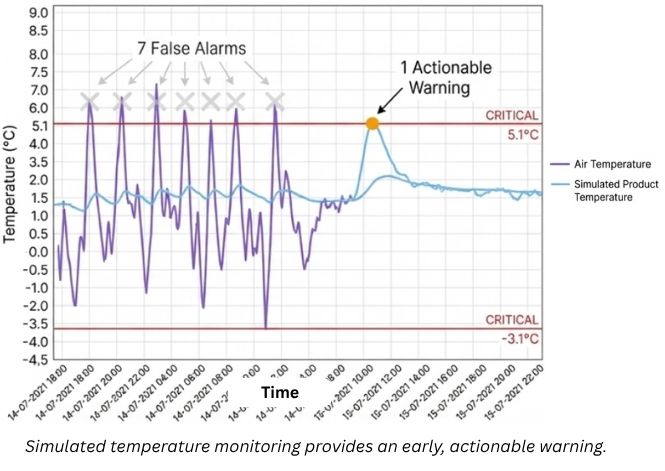
However, air temperature sensors react almost instantly to these changes. A brief door opening or defrost cycle can cause a rapid spike in air temperature, even though the stored product remains stable. This creates what engineers often refer to as ‘data noise’.

The Consequence: False Alarms and Alert Fatigue

When monitoring systems rely solely on air temperature, this ‘noise’ becomes problematic. Short-term spikes can trigger alarms that do not reflect real risk. Over time, this leads to frequent nuisance alerts or time wasted investigating non-issues. They can also cause desensitisation among staff and increased risk of missing genuine failures.
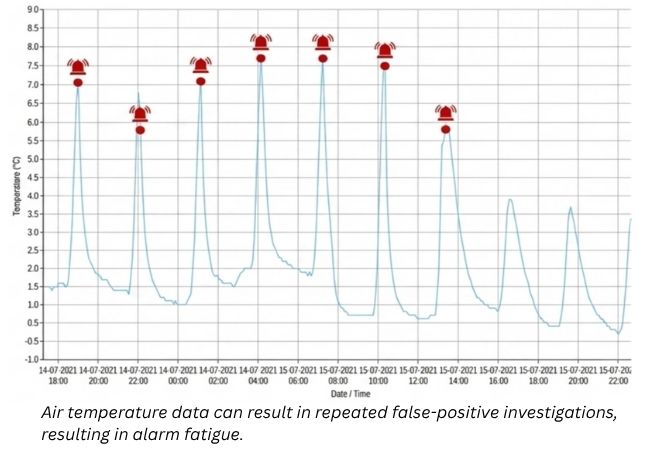
The concept of alarm fatigue is well documented in healthcare1 and industrial2 environments. Studies in clinical settings have shown that excessive non-actionable alarms can reduce response rates and compromise safety outcomes. The consequences are not just the risk of inefficiencies, but this can also be operationally dangerous.

The Core Insight: Products Change Temperature Slowly

To understand the solution, we need to consider a key principle of thermodynamics – products do not respond to temperature changes as quickly as air does. This is due to thermal inertia3. Air has low thermal mass, meaning it heats and cools rapidly. By contrast, products such as food, liquids, or pharmaceuticals have significantly higher thermal mass. They absorb and release heat slowly.

For example, a refrigerator may briefly reach 10°C during a defrost cycle, but the product inside may remain safely within acceptable limits. This difference is important, as monitoring air temperature alone provides an incomplete and often misleading picture of product safety.

Product Simulation Technology

Product simulation technology addresses this gap by shifting the focus from air temperature to estimated product temperature. Rather than measuring the product directly, these systems use algorithms to simulate how a product would respond to environmental changes.

At the core of this approach is a well-established scientific principle: Newton’s Law of Cooling. This law states that the rate at which an object changes temperature is proportional to the difference between its own temperature and the surrounding environment.

This relationship can be expressed as:

  • The greater the difference between air and product temperature, the faster the change.
  • As the product temperature approaches the air temperature, the rate of change slows.

Using this principle, simulation algorithms apply a damping formula to air temperature data. This effectively filters out rapid fluctuations and models the slower, more realistic response of the product.

Filtering Out the Noise

The result is a transformed data stream. Instead of reacting to every spike, the system produces a smoothed temperature profile that reflects the true condition of stored goods.

This has several important implications:

  1. Ignoring transient air spikes. Short-lived fluctuations caused by:
  • Door openings
  • Compressor cycles
  • Defrost events

These are effectively filtered out. These events may cause sharp peaks in air temperature graphs, but they have minimal impact on product temperature. Simulation ensures they do not distort the data.

  1. Reducing false positives: By removing volatile air data, monitoring systems can dramatically reduce unnecessary alerts. What look like ‘critical’ alerts triggered by air temperature are removed, leaving only meaningful warnings regarding product temperature when simulation is applied. This highlights a fundamental advantage: fewer alerts, but higher relevance.
  1. Reflecting true product behaviour: Simulation provides a temperature curve that mirrors how real products behave. Analysis and studies have shown strong correlation between4:
  • Simulated product temperature
  • Physical buffered probes (e.g. glycol-filled vials)

This is significant because buffered probes have long been considered a gold standard in regulated industries.

  1. Eliminating the need for physical probing: Traditionally, organisations have used physical probes inserted into products or placed in glycol solutions to approximate product temperature. While effective, these methods are intrusive, require manual setup, and add cost and complexity. Simulation offers a software-based alternative that achieves similar outcomes without physically touching the stock.

From Reactive to Proactive Monitoring

One of the most important benefits of product simulation is the shift from reactive to proactive monitoring. Because simulated product temperature changes more gradually, it provides a clearer signal of genuine risk. In failure scenarios, simulation can:

  • Detect sustained temperature rises
  • Trigger alerts earlier in the risk window
  • Provide time for corrective action

Simulated temperature monitoring will closely track the actual product and provide an early warning before critical thresholds are reached. This aligns with broader industry trends toward predictive and risk-based monitoring, particularly in pharmaceutical cold chain management.

Why This Matters for Compliance and Risk Management

Regulatory frameworks across food and healthcare sectors emphasise the importance of maintaining product integrity, not just environmental conditions.

For example:

  • HACCP principles focus on controlling risks to the product5
  • GDP guidelines stress the importance of maintaining product quality throughout storage and distribution6

Monitoring air temperature alone does not fully satisfy this requirement. Product simulation, by contrast, aligns more closely with the intent of these frameworks. It provides a measurement that reflects what truly matters: the condition of the product itself.

Capture Meaningful Data

Temperature monitoring should be less about capturing the fastest-changing data and more focused on capturing the most meaningful data. Air temperature is volatile, noisy, and often misleading. Product temperature is stable, relevant, and critical to safety. By applying scientific principles, product simulation technology bridges this gap. It transforms raw environmental data into actionable insight, enabling organisations to:

  • Reduce false alarms
  • Prevent alert fatigue
  • Improve operational efficiency
  • Strengthen compliance
  • Protect valuable stock

This approach is essential for any temperature-sensitive environment, but particularly where precision matters and margins for error are small.

Contact Kelsius for advice and to learn more about protecting your products with automated temperature monitoring.

Sources:

  1. Joint Commission, ‘National Patient Safety Goal on Alarm Management’ https://www.jointcommission.org/standards/national-patient-safety-goals/
  2. Health and Safety Executive (UK), ‘Better Alarm Handling’, https://www.hse.gov.uk/pubns/chis6.pdf
  3. Science Direct, definition ‘Thermal Inertia’, https://www.sciencedirect.com/topics/engineering/thermal-inertia
  4. National Institute of Standards and Technology (NIST), ‘Cold Chain Management: Temperature Monitoring Solutions’, https://www.nist.gov/system/files/documents/2017/04/28/NIC45-Cold-Chain-Management-Temperature-Monitoring-Solutions.pdf
  5. Food Standards Agency, ‘Hazard Analysis and Critical Control Point (HACCP), https://www.food.gov.uk/business-guidance/hazard-analysis-and-critical-control-point-haccp
  6. European Medicines Agency, ‘Good Distribution Practice’, https://www.ema.europa.eu/en/human-regulatory-overview/post-authorisation/compliance-post-authorisation/good-distribution-practice


Hours saved daily, instant traceability – just some of the benefits The Beaumont Mayfair enjoys using Kelsius

Read how The Beaumont Mayfair uses Kelsius

Operating at five-star standards leaves no room for compromise, especially when it comes to food safety. At The Beaumont Mayfair, a luxury London hotel with multiple kitchens, dining areas, and service environments, maintaining compliance across departments was becoming increasingly complex.

The Challenge

Before introducing Kelsius FoodCheck 2.0, the team relied heavily on paper-based processes. This created unnecessary administration, limited real-time visibility, and introduced risk around record accuracy, particularly during busy service periods. In an environment where rapid access to accurate data is critical, this approach left gaps in traceability and audit readiness.


Following implementation of the Kelsius system, the impact was immediate.

Digital workflows replaced manual checks, allowing kitchen teams to complete tasks quickly and consistently using probes and tablets. Management gained instant oversight across more than 20 refrigeration units, with automated monitoring and alerts helping prevent stock loss and reduce risk. Reporting, once time-consuming, is now accessible in seconds, supporting daily operations and audit preparation.

Hours saved daily, instant traceability

The hotel estimates a time saving of two to three hours per day, driven by faster checks, automated monitoring, and streamlined reporting. Beyond efficiency, the shift to tamper-proof digital records has strengthened due diligence and eliminated the risk of falsified entries.

Crucially, the system provides instant traceability across all operations, from goods-in to cooking compliance, while remaining flexible enough to match the hotel’s HACCP requirements.

Today, Kelsius is embedded across the Beaumont’s kitchens, pastry, private dining, and bar operations. The result is a more controlled, consistent, and confident approach to food safety, one that meets the expectations of a five-star environment while freeing up valuable time for staff to focus on service.


To book your free Kelsius demo, contact the Kelsius sales team.


Dubai-based FITT Meals trusts Kelsius to protect their food and their business

FITT Meals – trusted by 10K+ customers in the UAE, 500K+ meals delivered and 800+ 5-star Google reviews

Meal prep company FITT Meals is responsible for creating, preparing and delivering hundreds of thousands of meals in the UAE. They use Kelsius systems throughout their production processes to protect their food and their business.

Established in 2019, the FITT Meals business was started by Founded and CEO Eoin Cantwell. The aim of the company is to help health-conscious customers with busy lifestyles to save time but not sacrifice nutrition when it comes to mealtimes. FITT Meals shops, prepares, cooks, chills and delivers delicious and nutritionally balanced meals direct to over 500,000 customers throughout the UAE.


With affordable meal plans that provide maximum nutritional value and food quality, FITT Meals needed a temperature monitoring system that removed the need for paperwork and automated monitoring for improved efficiencies. As a company that strives to innovate and to be the best at what it does, they chose Kelsius to give them the confidence that they had an automated temperature monitoring system in place that they could rely on.

FITT Meals has recently opened a new warehouse and purpose-built facility to cater for their growing demand. With a now significantly larger operation, FITT Meals trusts Kelsius to monitor all the fresh food that passes through every stage of the production process including delivery, storage and food preparation.

Founder and CEO of FITT Meals, Eoin Cantwell said, “Moving into our new facility, there always needs to be investments upfront. One of the smartest ones we’ve made is with Kelsius, which literally ensures our food safety and ensures that our temperatures are all on check. It’s all done remotely, and everything is absolutely guaranteed for us. It’s a huge comfort knowing that we have a company like Kelsius behind us, keeping our compliance and our products up to date.”

Watch the video to learn more about how FITT Meals management trusts Kelsius.

To book your free Kelsius demo, contact the Kelsius sales team.

Kelsius Shortlisted in Technology Category at the Guaranteed Irish Business Awards

Kelsius is delighted to have been shortlisted as a finalist in the upcoming Guaranteed Irish Business Awards. 

Kelsius has been named as a finalist in the Technology category. The recognition is timely as Kelsius has just announced its new innovations in technology, with the launch of FoodTrak365 and CoolTrak365 for temperature monitoring for goods in transit.  The new products add to Kelsius’ suite of monitoring systems for the food and healthcare industries which allow businesses to reduce costs, improve compliance, protect stock, and save staff time by introducing automation and removing manual processes.

The Guaranteed Irish Business Awards recognise Irish businesses and organisations that invest in long-term employment, strengthen local communities, and deliver trusted, high-quality products and solutions. At Kelsius, these principles are part of how the company operates, from designing and manufacturing products in Donegal to partnering with Irish suppliers, helping drive economic growth at both a local and national level.

Commenting on the announcement of finalists, Guaranteed Irish CEO Bríd O’ Connell said, “It is more important than ever to recognise and support the companies driving progress here in Ireland, businesses whose ambition, creativity, and commitment benefit not just their industries, but the wider Irish economy and communities they serve.” 

The awards are judged by an independent panel of industry leaders, including representatives from Matheson, An Post, Musgrave, PTSB, Viatel Technology Group and FBD Insurance.

Winners will be announced at the Guaranteed Irish Business Awards ceremony which will take place in a new venue, the Dublin Royal Convention Centre on 5 March.

For more, visit https://www.guaranteedirish.ie/giba-shortlist/

The Importance of Temperature Monitoring in Healthcare Settings

Maintaining precise and reliable temperature control is a fundamental requirement across modern healthcare. From storing vaccines and reagents to managing sterile instruments and monitoring laboratory environments, temperature stability plays a direct role in patient safety, diagnostic accuracy, and regulatory compliance. As clinical environments become more complex and the demands on healthcare professionals continue to grow, automated temperature monitoring has emerged as a critical tool that supports quality care while reducing risk.

Why Temperature Monitoring Matters

Every healthcare specialty has unique temperature-sensitive assets. In endoscopy and decontamination areas, the integrity of reprocessed instruments depends on controlled storage conditions. In dentistry or podiatry clinics, disinfectants, impression materials, and medications must be maintained within safe ranges. Laboratories require stable temperatures for reagents, incubators, and specimen storage, while nursing teams rely on medication fridges and controlled drugs cabinets that must remain continuously compliant.

Any deviation whether caused by equipment failure, power outages, door-ajar incidents, or environmental fluctuation can compromise both safety and compliance. Manual checks, still common in many settings, cannot provide the continuous oversight required to detect early excursions or prevent avoidable wastage.

Automated monitoring helps close this gap. It provides healthcare teams with 24/7 visibility over critical environments, reduces the burden of manual documentation, and ensures that clinical decisions are supported by accurate, audit-ready data.

A Trusted Innovator in Healthcare Monitoring

Providers such as Kelsius provide wireless temperature monitoring and digital task management, all in one system. Kelsius’ solutions are widely deployed across hospitals, laboratories, pharmacies, and specialist clinical units in over 50 countries. The company’s R&D-driven approach, combined with a strong focus on compliance and sustainability, has made it a trusted partner for organisations seeking dependable monitoring systems.

Accreditations such as ISO 9001:2015 and ISO 14001:2015, alongside adherence to ISO 27001 information security requirements and FDA 21 CFR Part 11, signal a commitment to quality and robust data governance.

The Kelsius system – CoolCheck – is relied upon by healthcare organisations that demand stringent oversight and evidence-based traceability. Institutions such as Abbott Labs, Baxter, Roche Diagnostics, Eurofins, HSE Ireland, and multiple NHS Trusts use Kelsius monitoring to protect samples, medicines, and sterile supplies. Their applications range from GMP storage and aseptic units to large-scale warehouse monitoring and multi-site pharmacy operations.

Automated Monitoring Through CoolCheck

CoolCheck is designed to support the controlled environments found across healthcare. Its flexibility allows it to serve multiple sectors, from endoscopy to IPC and lab sciences. Wireless sensors placed in fridges, freezers, incubators, cryogenic tanks, or cleanroom spaces transmit data securely to the cloud, giving clinicians immediate access to real-time and historical information.

Instant alerts notify teams when thresholds are breached, ensuring rapid intervention and reducing the risk of sample loss or equipment downtime. All measurements and corrective actions are stored in a comprehensive audit trail, which simplifies inspections and reduces administrative workload. For teams managing diverse clinical processes, the system offers optional humidity, O₂, CO₂, or door-ajar monitoring, as well as the ability to support in-house mapping for specialised or high-risk areas.

How Automated Monitoring Supports Healthcare Teams

  1. Patient Safety and Infection Control
    Proper temperature maintenance is essential to prevent bacterial growth, preserve sterility, and maintain material integrity. Automated systems help protect patients by ensuring that devices, medications, and biological materials remain within certified ranges.
  2. Audit Readiness and Regulatory Assurance
    Healthcare environments face rigorous audits and local governance frameworks. Automated logs ensure that documentation is accurate, complete, and always ready for inspection.
  3. Efficiency and Workforce Productivity
    Manual checks can consume valuable clinical time. Automated monitoring reduces administrative burdens and frees staff to focus on patient care and laboratory accuracy.
  4. Incident Investigation and Traceability
    Access to historical temperature trends allows teams to quickly trace root causes following equipment failures, ensuring informed decision-making and improved risk mitigation.
  5. Scalable Monitoring Across Sites
    Whether overseeing a single fridge or managing multiple departments, sensors are easy to deploy and system dashboards offer remote visibility across locations.
  6. Minimising Waste and Supporting Sustainability
    Reducing the loss of high-value reagents, vaccines, or sterile stock helps protect budgets and reduce environmental impact. Automated monitoring also eliminates paper-based record keeping.
  7. Building Resilience and Reducing Risk
    Early detection of temperature deviations enables proactive response. This reduces the likelihood of compromised stock, service disruption, or cancelled procedures.

Supporting Modern Clinical Practice

In fast-paced healthcare environments, temperature monitoring is an essential safeguard. Automated systems help professionals uphold the highest standards of safety, compliance, and operational efficiency. As healthcare continues to advance, the ability to maintain controlled environments reliably will remain a cornerstone of quality care.


For more information visit www.kelsius.com.

Nisa stores to save up to £10k a year with Kelsius food safety management tech

Nisa

Nisa retailers stand to save thousands annually as the group progresses with a new technology trial in partnership with Kelsius. The cutting-edge food safety management system is currently being tested in selected stores. Kelsius undertook a three-month trial with independent retailer Gary Batten across his two Nisa stores in Cornwall. During the pilot, Batten saved up two hours of staff time per day at his store in St Stephens Cornwall, amounting to £10,000 a year.

His other Nisa store, based in Pentewan, Cornwall, allowed him to optimise up to one hour of colleague labour a day, saving £9,000 in annual costs. The innovative digital solution offers automated temperature monitoring and HACCP compliance tools via wireless sensors and probes. Retailers can access real-time data and generate reports that streamline audits and compliance processes, while digital checklists support consistent completion of daily hygiene and safety routines.

Danielle Guy, UK food retail sales manager for Kelsius, emphasised the value the system delivers, particularly amid the ongoing challenges in the retail sector. “With rising costs and persistent labour shortages, retailers are under more pressure than ever to find efficiency gains,” she said. “The Kelsius system empowers teams to ensure food safety is managed efficiently and consistently, without the burden of manual checks.”

Initial feedback from Nisa retailers suggests strong interest in rolling out the technology more widely following the trial phase, citing time savings, enhanced traceability, and reduced risk of human error.

In May 2018 Co-op Wholesale completed its acquisition of Nisa Retail Limited. Working with the Co-op, Nisa Partners still have the freedom to operate independently. They have the flexibility, insight, and tailored support they need to thrive, backed by Co-op’s industry-leading own-brand range, supply chain expertise, and buying power.


Read The Grocer article covering this story here.


Navigating Food Safety Compliance in UK Retail: Challenges and Solutions

Ensuring food safety is a paramount concern for UK food retailers, as it directly impacts consumer health, brand reputation, and regulatory compliance. Navigating the complexities of food safety regulations can be challenging, but with the right tools and systems, retailers can maintain high standards and streamline their operations.


Understanding UK Food Safety Regulations 

The UK enforces stringent food safety laws to protect consumers and uphold food quality. Key legislation includes the Food Safety Act 1990 and the Food Safety and Hygiene (England) Regulations 2013, which mandate that businesses ensure food is safe for consumption and meet hygiene standards.  

Retailers are required to implement effective food safety management systems, conduct regular hazard analyses, and maintain detailed records of their processes. Non-compliance can result in severe penalties, including fines, legal action, and damage to brand reputation. 


Common Challenges Faced by UK Retailers 
  1. Regulatory Compliance: Keeping abreast of evolving food safety regulations demands continuous monitoring and adaptation. 
  2. Record Keeping: Maintaining accurate and accessible records is essential but can be labour-intensive and prone to human error. 
  3. Supply Chain Management: Ensuring that all suppliers adhere to food safety standards requires diligent oversight and coordination. 
  4. Staff Training: Regular training is necessary to keep staff informed about best practices and regulatory changes, which can be resource intensive. 
  5. Labour Shortages: Retail particularly continues to face the challenge of labour shortages caused in varying degrees by the effects of the pandemic, Brexit and the availability of a flow of a suitable workforce.  
  6. Rising costs: The cost of doing business is significant for UK food retailers who need to consider the price of stock, energy, labour, regulatory compliance, local services and business rates. All while at the same time consumer behaviour continues to shift towards price-driven purchase decisions.  


How a Digital HACCP System can Help 

Kelsius offers innovative digital solutions designed to assist UK retailers in overcoming these challenges: 

  • FoodCheck 2.0: This system automates temperature monitoring and HACCP (Hazard Analysis and Critical Control Points) management, reducing reliance on manual checks and paperwork. It provides real-time data and alerts, ensuring swift responses to potential issues. 
  • CoolCheck: Specialising in wireless temperature monitoring, CoolCheck ensures that all refrigeration units operate within safe parameters, preventing spoilage and ensuring compliance with food safety standards.

Benefits of Implementing Kelsius Systems 

  • Enhanced Compliance: Automated monitoring and record-keeping simplify adherence to regulations and facilitate smoother audits. 
  • Operational Efficiency: Reducing manual tasks allows staff to focus on core business activities, improving overall productivity. 
  • Data-Driven Insights: Access to comprehensive data enables informed decision-making and proactive management of food safety risks. 


Conclusion
 

In the dynamic landscape of UK retail, maintaining rigorous food safety standards is both a regulatory requirement and a competitive advantage. Kelsius provides the tools necessary to streamline compliance, enhance operational efficiency, and ensure the highest levels of food safety. 

For more information on how Kelsius can support your business, visit www.kelsius.com. 


The Net Zero Drive & Fish and Chips: How Kelsius Is Helping the Industry Go Greener

Fish & Chips Meets Net Zero: A Deep-Fried Dilemma?

Fish and chips is more than a national treasure in the UK and Ireland—it’s a £1.2 billion industry. But as the world races towards Net Zero carbon emissions, this much-loved takeaway staple is under pressure to clean up its act.

From energy-guzzling fryers to high food waste, the carbon footprint of fish and chips is far from sustainable. The good news? Technology is catching up—and companies like Kelsius are stepping in to help.


What Is Net Zero, and Why Does It Matter?

“Net Zero” means balancing the amount of greenhouse gases emitted with the amount removed from the atmosphere. The UK government has legally committed to reaching Net Zero by 2050.

For foodservice businesses, this means:

  • Cutting down on energy use
  • Reducing food waste
  • Rethinking packaging
  • Improving supply chain transparency

That’s where the fish and chips industry comes in—an industry that relies on deep fryers, refrigeration, and fast-moving stock.


The Environmental Cost of Fish and Chips

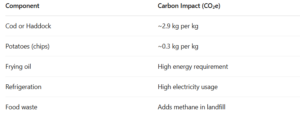
While fish and chips might seem harmless, every plate carries a carbon load. Here’s a quick look:

The biggest culprits? Poor temperature management, energy-inefficient equipment, and lack of digital tracking—leading to spoiled stock and wasted energy.


Kelsius: A Smart, Sustainable Solution

Kelsius is helping fish and chip shops across the UK and Ireland step into the Net Zero era with smart Digital HACCP (Hazard Analysis and Critical Control Points) and temperature monitoring systems.

Here’s how Kelsius is making a difference:

  1. Reducing Energy Waste

By using automated temperature monitoring, shops can:

  • Avoid overcooling or overheating fridges/freezers
  • Get real-time alerts when temperatures drift
  • Save electricity by operating within optimal zones

This reduces both energy bills and carbon footprint.

  1. Cutting Food Waste

Spoiled stock is a massive issue. Kelsius helps prevent it by:

  • Automating temp logs, removing human error
  • Ensuring compliance with food safety standards
  • Preventing stock loss from unnoticed fridge failures

That means less waste—and less emissions from food going to landfill.

  1. Improving Compliance with Net Zero Goals

Food safety and sustainability go hand-in-hand. With Kelsius:

  • Businesses meet EHO standards digitally
  • Staff spend less time on manual checks
  • Reporting for sustainability audits is easy and paperless


Why This Matters for the Fish and Chips Industry

As consumer demand for sustainability grows, people want more than great taste—they want eco-conscious food choices.

Fish and chip shops that adopt smart tech like Kelsius:

  • Improve their brand reputation
  • Appeal to eco-aware customers
  • Save money and future-proof their business


Steps Fish & Chip Shops Can Take Today

Ready to lower your carbon footprint? Here’s a Net Zero action list:

✅ Install digital temperature monitoring
✅ Use energy-efficient fryers and LED lighting
✅ Choose locally sourced, MSC-certified fish
✅ Switch to biodegradable or recyclable packaging
✅ Train staff in sustainability best practices
✅ Monitor food waste and adjust ordering habits

Kelsius Celebrates Winning the Technology Award at the Guaranteed Irish Business Awards 2025

Kelsius is proud to announce that they have been named the winner of the Technology Award at the Guaranteed Irish Business Awards 2025. This prestigious recognition highlights Kelsius’ commitment to innovation, excellence, and sustainability in the field of temperature monitoring and HACCP compliance.

The Guaranteed Irish Business Awards celebrate the best of Irish business and recognise companies that demonstrate a commitment to supporting local communities, creating jobs, and driving innovation across various industries.

Cutting-Edge Technology

The Technology Award was presented to Kelsius for its cutting-edge solutions in digital HACCP and wireless temperature monitoring. These solutions are designed to help businesses across the foodservice, retail, and pharmaceutical industries maintain the highest standards of food safety and storage integrity. Kelsius’ IoT-driven solutions offer real-time monitoring, regulatory compliance, and enhanced efficiency, ultimately reducing the risk of foodborne illnesses and ensuring that critical medicines and vaccines are stored correctly.

As a Guaranteed Irish company, Kelsius adheres to the principles of quality, local job creation, and sustainability. The Kelsius manufacturing facility is based in Donegal, where they are committed to supporting Irish suppliers and the local economy. By championing local talent and resources, Kelsius contributes to the growth and prosperity of communities across Ireland.

Celebrating Innovation and Sustainability

At Kelsius, sustainability is at the core of everything they do. Kelsius has earned a Silver Medal from EcoVadis for its ongoing commitment to corporate social responsibility (CSR) and sustainability. Kelsius solutions help businesses reduce waste, energy consumption, and operational costs, while promoting a greener future. From eliminating paper records to ensuring energy-efficient operations, the company works hard to ensure that its temperature monitoring systems are as environmentally friendly as they are effective.

Kelsius’ commitment to corporate responsibility goes beyond its products. Through initiatives like the EasyTressie programme, Kelsius is actively involved in projects that support environmental and social causes, making a tangible impact on communities and the environment. Kelsius partners with local organisations and its dedication to sustainable practices underscore the company’s mission to create value for both businesses and society.

Kelsius: A Proud Member of Guaranteed Irish

The Guaranteed Irish mark represents businesses that are committed to creating sustainable jobs, supporting local communities, and providing high-quality products and services. Kelsius embodies these values every day by developing and manufacturing products locally in Donegal and working closely with Irish suppliers to ensure that they contribute positively to the economy.

Gala Award Ceremony at the Mansion House, Dublin

The award was presented to Kelsius at the 2025 Guaranteed Irish Business Awards gala, held in the iconic Round Room at The Mansion House in Dublin.


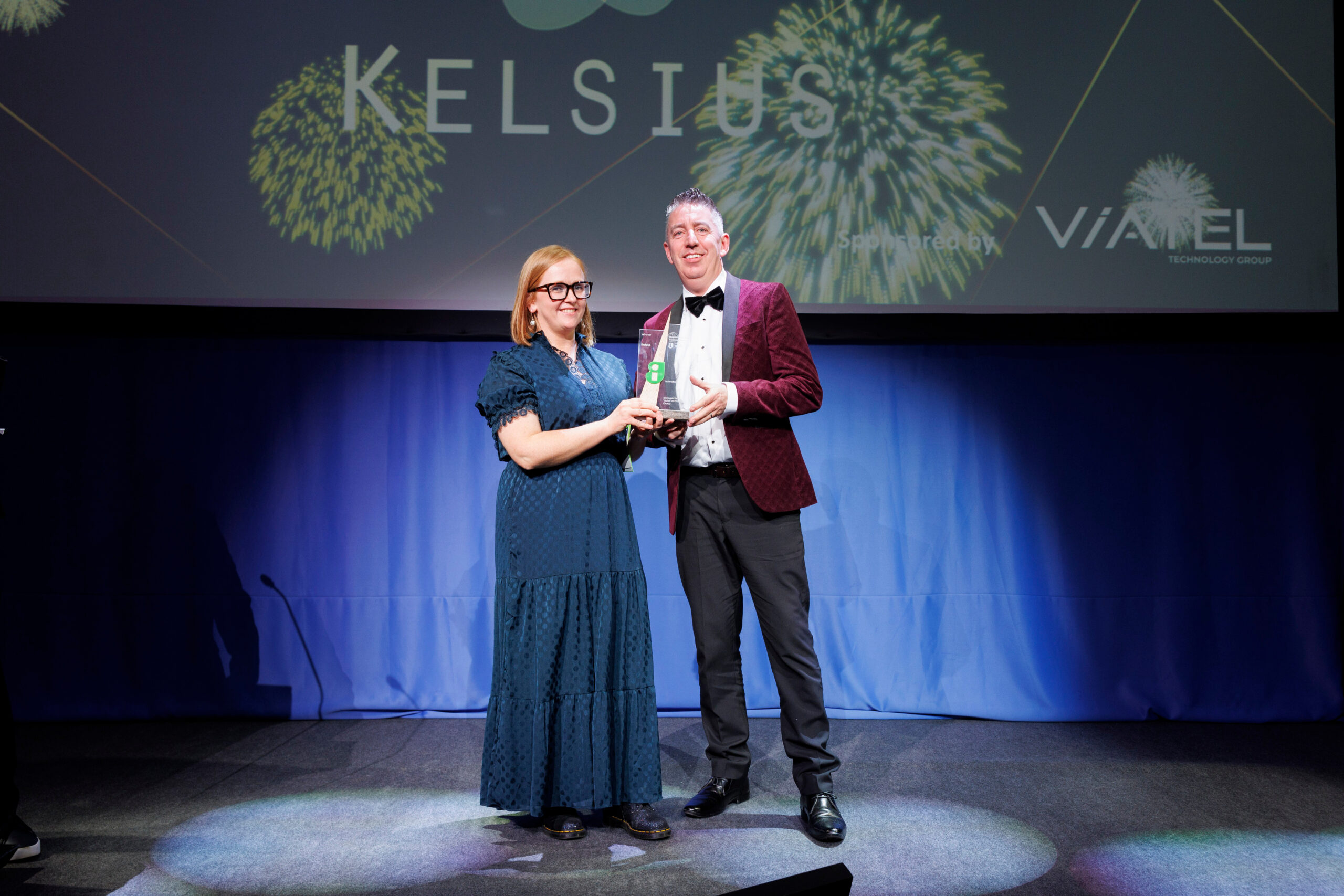
Pictured Arlene Kenny, Viatel Technology Group with Keith Hicks, Kelsius, winner of Technology, sponsored by Viatel Technology Group at the 2025 Guaranteed Irish Business Awards, proudly supported by PTSB.

Accepting the award, Kelsius Corporate Account Director Keith Hicks said, “I am thrilled to accept the Technology Award on behalf of Kelsius. On behalf of the entire team, I’d like to thank Guaranteed Irish for this accolade. We are a very proud Guaranteed Irish member company and we’re extremely grateful for this recognition, especially in the company of so many other leading and innovative Irish businesses.

“This award is all the more important to us as our technology supports a range of indigenous Irish companies who we help to protect the safety and security of their food, medicines and other products every day. We’re delighted to play our part in helping other Irish companies to grow and compete.”


Sales Team Expansion: Kelsius Ends 2024 on a High Note

sales-team

Kelsius is proud to announce the significant expansion of its sales team as the company prepares for an exciting 2025. This marks another major milestone for the company, a global leader in digital HACCP and wireless temperature monitoring solutions.

Meet the New Sales Team Members

To support its growing presence in key markets, Kelsius has welcomed three new professionals:

  • Shane Austin – Sales Manager, Food Manufacturing
    Shane brings over 20 years of experience in the food industry, having held key account management roles with 2 Sisters Food Group’s poultry division and Tulip/Danish Crown. Over the past decade, he has specialized in cargo food temperature monitoring, gaining deep insights into the challenges faced in all aspects of this field.
  • Charlie Stableford – Sales Manager, Hospitality
    Charlie brings expertise in helping hospitality businesses simplify and digitize their food safety systems. He focuses on practical solutions that streamline daily operations, save time, and reduce stress. Charlie is passionate about building strong client relationships and delivering tools that make a real difference. Outside of work, he enjoys playing football, cooking, and spending time with his family.
  • Matthew Holland – International Partner Manager
    With over 20 years in GPS and IoT solutions, Matthew is a proven expert in real-time supply chain visibility and tracking technologies. As Sales Director at Frigga, he led product launches, managed RFPs, and represented the company at global events. From 2021 to 2022, he introduced Tive’s tracking solution to the UK, working with clients like Rolls Royce and The National Gallery while speaking at industry conferences. In 2010, Matthew developed GPS tracking solutions for clients such as Riot Games, Samsung, and Lindt Chocolate, later merging these ventures with Tive in 2021.
A Strategic Move for Growth

As part of its growth strategy, Kelsius relocated its headquarters to temporary premises in Gweedore Business Park. This transition ensures uninterrupted operations while preparing for the construction of a state-of-the-art manufacturing facility in Falcarragh, Co. Donegal.

The new facility, expected to open in 2026, will boost production capacity, meet rising demand, and maintain Kelsius’ reputation for cutting-edge technology and exceptional customer service.

Architectural drawing Kelsius’ new facility

Leadership Perspective

Mario Kelly, Chief Commercial Officer at Kelsius, commented:

“Shane, Charlie, and Matthew bring unmatched energy and expertise to Kelsius. Their efforts will help food manufacturers, hospitality clients, and international partners achieve operational efficiencies. Alongside our new facility plans, this significant expansion to our sales team strengthens our ability to deliver advanced solutions worldwide.”

Learn More About Kelsius

Kelsius is dedicated to delivering cutting-edge solutions that enhance compliance and operational excellence. Our innovative offerings include:

Digital HACCP Solutions

Ensure seamless compliance with food safety standards and regulations, including those outlined by the Food Safety Authority of Ireland (FSAI) and FDA guidelines. Our solutions help streamline processes, maintain accurate records, and meet the highest standards of food safety and hygiene.

Wireless Temperature Monitoring

Monitor and manage temperatures in real-time with our advanced wireless technology. Safeguard your operations by ensuring consistent compliance with regulatory req uirements and preventing costly errors while maintaining product integrity at all times.

Learn more about Kelsius’s innovative solutions here.