Why Monitoring Air Temperature isn’t Enough: Product Simulation in Cold Storage

Temperature monitoring sits at the heart of compliance, safety, and quality assurance across food, pharmaceutical, and healthcare sectors. Whether safeguarding vaccines, chilled foods, or laboratory samples, businesses rely on accurate temperature data to make critical decisions.

But there is a fundamental flaw in how temperature is often measured. Most monitoring systems track air temperature. Yet, what truly matters is the temperature of the product itself.

This distinction is not trivial. In fact, it can be the difference between false alarms and genuine risk, between wasted stock and proactive intervention. Increasingly, industry experts and researchers are recognising that product simulation technology is essential for accurate temperature monitoring.

The Problem with Air Temperature Monitoring

At first glance, measuring air temperature seems logical. It is easy to capture, quick to respond, and widely used. However, refrigeration systems do not operate in a steady, constant state. They are dynamic systems by design.

Refrigeration units operate within controlled cycles:

  • Compressors switch on and off to maintain efficiency
  • Internal temperatures fluctuate within a defined band
  • Defrost cycles temporarily raise temperatures
  • Door openings introduce short bursts of warmer air

These behaviours create natural temperature oscillations, often ranging several degrees above and below the setpoint.

Crucially, these fluctuations are:

  • Normal
  • Engineered
  • Necessary for system performance and longevity

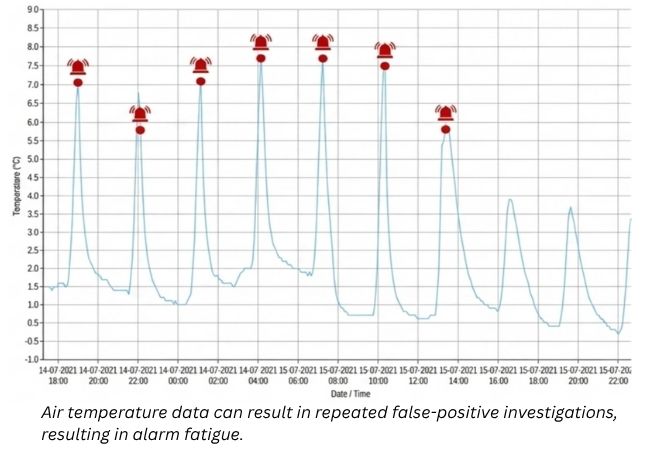
However, air temperature sensors react almost instantly to these changes. A brief door opening or defrost cycle can cause a rapid spike in air temperature, even though the stored product remains stable. This creates what engineers often refer to as ‘data noise’.

The Consequence: False Alarms and Alert Fatigue

When monitoring systems rely solely on air temperature, this ‘noise’ becomes problematic. Short-term spikes can trigger alarms that do not reflect real risk. Over time, this leads to frequent nuisance alerts or time wasted investigating non-issues. They can also cause desensitisation among staff and increased risk of missing genuine failures.

The concept of alarm fatigue is well documented in healthcare1 and industrial2 environments. Studies in clinical settings have shown that excessive non-actionable alarms can reduce response rates and compromise safety outcomes. The consequences are not just the risk of inefficiencies, but this can also be operationally dangerous.

The Core Insight: Products Change Temperature Slowly

To understand the solution, we need to consider a key principle of thermodynamics – products do not respond to temperature changes as quickly as air does. This is due to thermal inertia3. Air has low thermal mass, meaning it heats and cools rapidly. By contrast, products such as food, liquids, or pharmaceuticals have significantly higher thermal mass. They absorb and release heat slowly.

For example, a refrigerator may briefly reach 10°C during a defrost cycle, but the product inside may remain safely within acceptable limits. This difference is important, as monitoring air temperature alone provides an incomplete and often misleading picture of product safety.

Product Simulation Technology

Product simulation technology addresses this gap by shifting the focus from air temperature to estimated product temperature. Rather than measuring the product directly, these systems use algorithms to simulate how a product would respond to environmental changes.

At the core of this approach is a well-established scientific principle: Newton’s Law of Cooling. This law states that the rate at which an object changes temperature is proportional to the difference between its own temperature and the surrounding environment.

This relationship can be expressed as:

  • The greater the difference between air and product temperature, the faster the change.
  • As the product temperature approaches the air temperature, the rate of change slows.

Using this principle, simulation algorithms apply a damping formula to air temperature data. This effectively filters out rapid fluctuations and models the slower, more realistic response of the product.

Filtering Out the Noise

The result is a transformed data stream. Instead of reacting to every spike, the system produces a smoothed temperature profile that reflects the true condition of stored goods.

This has several important implications:

  1. Ignoring transient air spikes. Short-lived fluctuations caused by:
  • Door openings
  • Compressor cycles
  • Defrost events

These are effectively filtered out. These events may cause sharp peaks in air temperature graphs, but they have minimal impact on product temperature. Simulation ensures they do not distort the data.

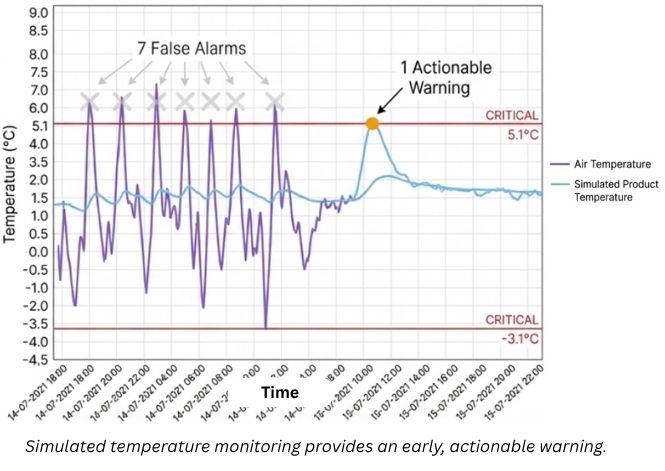
  1. Reducing false positives: By removing volatile air data, monitoring systems can dramatically reduce unnecessary alerts. What look like ‘critical’ alerts triggered by air temperature are removed, leaving only meaningful warnings regarding product temperature when simulation is applied. This highlights a fundamental advantage: fewer alerts, but higher relevance.
  1. Reflecting true product behaviour: Simulation provides a temperature curve that mirrors how real products behave. Analysis and studies have shown strong correlation between4:
  • Simulated product temperature
  • Physical buffered probes (e.g. glycol-filled vials)

This is significant because buffered probes have long been considered a gold standard in regulated industries.

  1. Eliminating the need for physical probing: Traditionally, organisations have used physical probes inserted into products or placed in glycol solutions to approximate product temperature. While effective, these methods are intrusive, require manual setup, and add cost and complexity. Simulation offers a software-based alternative that achieves similar outcomes without physically touching the stock.

From Reactive to Proactive Monitoring

One of the most important benefits of product simulation is the shift from reactive to proactive monitoring. Because simulated product temperature changes more gradually, it provides a clearer signal of genuine risk. In failure scenarios, simulation can:

  • Detect sustained temperature rises
  • Trigger alerts earlier in the risk window
  • Provide time for corrective action

Simulated temperature monitoring will closely track the actual product and provide an early warning before critical thresholds are reached. This aligns with broader industry trends toward predictive and risk-based monitoring, particularly in pharmaceutical cold chain management.

Why This Matters for Compliance and Risk Management

Regulatory frameworks across food and healthcare sectors emphasise the importance of maintaining product integrity, not just environmental conditions.

For example:

  • HACCP principles focus on controlling risks to the product5
  • GDP guidelines stress the importance of maintaining product quality throughout storage and distribution6

Monitoring air temperature alone does not fully satisfy this requirement. Product simulation, by contrast, aligns more closely with the intent of these frameworks. It provides a measurement that reflects what truly matters: the condition of the product itself.

Capture Meaningful Data

Temperature monitoring should be less about capturing the fastest-changing data and more focused on capturing the most meaningful data. Air temperature is volatile, noisy, and often misleading. Product temperature is stable, relevant, and critical to safety. By applying scientific principles, product simulation technology bridges this gap. It transforms raw environmental data into actionable insight, enabling organisations to:

  • Reduce false alarms
  • Prevent alert fatigue
  • Improve operational efficiency
  • Strengthen compliance
  • Protect valuable stock

This approach is essential for any temperature-sensitive environment, but particularly where precision matters and margins for error are small.

Contact Kelsius for advice and to learn more about protecting your products with automated temperature monitoring.

Sources:

  1. Joint Commission,National Patient Safety Goal on Alarm Management’ https://www.jointcommission.org/standards/national-patient-safety-goals/
  2. Health and Safety Executive (UK), ‘Better Alarm Handling’, https://www.hse.gov.uk/pubns/chis6.pdf
  3. Science Direct, definition ‘Thermal Inertia’, https://www.sciencedirect.com/topics/engineering/thermal-inertia
  4. National Institute of Standards and Technology (NIST), ‘Cold Chain Management: Temperature Monitoring Solutions’, https://www.nist.gov/system/files/documents/2017/04/28/NIC45-Cold-Chain-Management-Temperature-Monitoring-Solutions.pdf
  5. Food Standards Agency, ‘Hazard Analysis and Critical Control Point (HACCP), https://www.food.gov.uk/business-guidance/hazard-analysis-and-critical-control-point-haccp
  6. European Medicines Agency, ‘Good Distribution Practice’, https://www.ema.europa.eu/en/human-regulatory-overview/post-authorisation/compliance-post-authorisation/good-distribution-practice

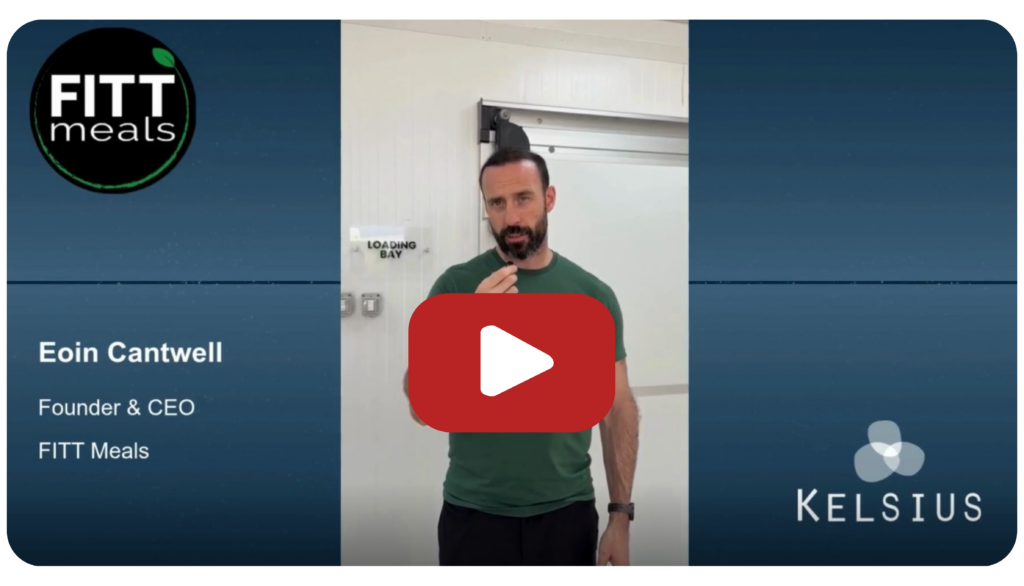
Dubai-based FITT Meals trusts Kelsius to protect their food and their business

Meal prep company FITT Meals is responsible for creating, preparing and delivering hundreds of thousands of meals in the UAE. They use Kelsius systems throughout their production processes to protect their food and their business.

Established in 2019, the FITT Meals business was started by Founded and CEO Eoin Cantwell. The aim of the company is to help health-conscious customers with busy lifestyles to save time but not sacrifice nutrition when it comes to mealtimes. FITT Meals shops, prepares, cooks, chills and delivers delicious and nutritionally balanced meals direct to over 500,000 customers throughout the UAE.


With affordable meal plans that provide maximum nutritional value and food quality, FITT Meals needed a temperature monitoring system that removed the need for paperwork and automated monitoring for improved efficiencies. As a company that strives to innovate and to be the best at what it does, they chose Kelsius to give them the confidence that they had an automated temperature monitoring system in place that they could rely on.

FITT Meals has recently opened a new warehouse and purpose-built facility to cater for their growing demand. With a now significantly larger operation, FITT Meals trusts Kelsius to monitor all the fresh food that passes through every stage of the production process including delivery, storage and food preparation.

Founder and CEO of FITT Meals, Eoin Cantwell said, “Moving into our new facility, there always needs to be investments upfront. One of the smartest ones we’ve made is with Kelsius, which literally ensures our food safety and ensures that our temperatures are all on check. It’s all done remotely, and everything is absolutely guaranteed for us. It’s a huge comfort knowing that we have a company like Kelsius behind us, keeping our compliance and our products up to date.”

Watch the video to learn more about how FITT Meals management trusts Kelsius.

To book your free Kelsius demo, contact the Kelsius sales team.

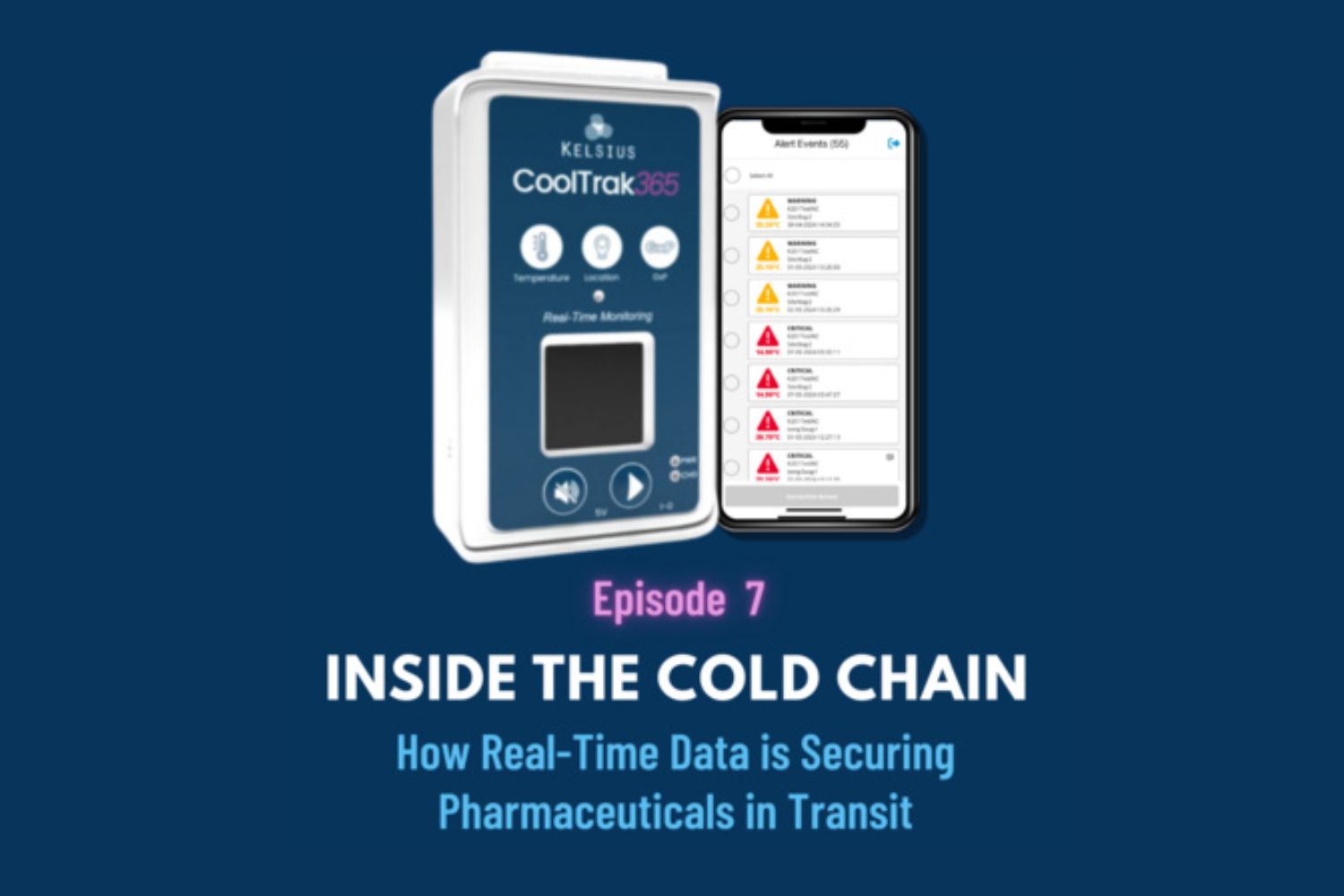
Podcast – Inside the Cold Chain: How Real-Time Data is Securing Pharmaceuticals in Transit

What happens when a fridge fails mid-transit? In pharma, it could mean losing thousands in stock or worse, risking patient safety.

In this episode, we dive into how CoolTrak365 by Kelsius is helping life sciences, laboratories, and wholesale pharma providers protect their cold chain. With real-time alerts, GPS tracking, and tamperproof audit trails, CoolTrak365 offers full end-to-end visibility for sensitive medical shipments from the factory to the pharmacy.

Listen to the episode now here.


Kelsius Shortlisted in Technology Category at the Guaranteed Irish Business Awards

Kelsius is delighted to have been shortlisted as a finalist in the upcoming Guaranteed Irish Business Awards. 

Kelsius has been named as a finalist in the Technology category. The recognition is timely as Kelsius has just announced its new innovations in technology, with the launch of FoodTrak365 and CoolTrak365 for temperature monitoring for goods in transit.  The new products add to Kelsius’ suite of monitoring systems for the food and healthcare industries which allow businesses to reduce costs, improve compliance, protect stock, and save staff time by introducing automation and removing manual processes.

The Guaranteed Irish Business Awards recognise Irish businesses and organisations that invest in long-term employment, strengthen local communities, and deliver trusted, high-quality products and solutions. At Kelsius, these principles are part of how the company operates, from designing and manufacturing products in Donegal to partnering with Irish suppliers, helping drive economic growth at both a local and national level.

Commenting on the announcement of finalists, Guaranteed Irish CEO Bríd O’ Connell said, “It is more important than ever to recognise and support the companies driving progress here in Ireland, businesses whose ambition, creativity, and commitment benefit not just their industries, but the wider Irish economy and communities they serve.” 

The awards are judged by an independent panel of industry leaders, including representatives from Matheson, An Post, Musgrave, PTSB, Viatel Technology Group and FBD Insurance.

Winners will be announced at the Guaranteed Irish Business Awards ceremony which will take place in a new venue, the Dublin Royal Convention Centre on 5 March.

For more, visit https://www.guaranteedirish.ie/giba-shortlist/

Podcast – The Deep Dive: Food Safety Reimagined

Welcome to The Deep Dive, where we explore the technologies transforming commercial kitchens from paperwork chaos to digital confidence.

In this episode, we unpack the revolution happening behind kitchen doors – the shift from stacks of paper logs to automated, verified compliance. We’re diving deep into Kelsius’s FoodCheckToGo, an automated digital HACCP system that’s changing how restaurants, hotels, hospitals, and retail food businesses manage food safety.

Discover how Bluetooth-enabled temperature probes, cloud-based documentation, and real-time alerts are eliminating pencil-whipping, saving 30+ hours per week, and turning audit anxiety into audit confidence. From preventing thousands in stock losses to impressing environmental health officers, this is the story of how technology is protecting both businesses and consumers – one verified temperature reading at a time.

Perfect for: Kitchen managers, food business owners, operations directors, compliance officers, and anyone interested in foodtech innovation.

Listen to the episode here.


Podcast – The Alert Crisis: Why Mobile Push Notifications Became the Universal Safety Net

A simple push notification could save lives. In this episode of The Alert Crisis, we explore how mobile push alerts have quietly replaced SMS and calls as the new gold standard in critical communications—from vaccine storage to global food chains.

Featuring deep insights into the failures of outdated systems and the rise of smarter, verifiable alerting powered by Kelsius, we unpack real-world disasters, compliance mandates like FDA 21 CFR Part 11 and HACCP, and cutting-edge integrations with AI, IoT, and even blockchain.

Explore the intersection of compliance, innovation, and safety across food and life science industries.

The Alert Crisis dives deep into how digital tools like push notifications, wireless sensors, and real-time monitoring are replacing outdated systems in foodservice, pharma, labs, and logistics. Hosted by Kelsius, Ireland’s leading digital HACCP and temperature monitoring provider, each episode brings expert insights, real-world stories, and actionable takeaways.

Listen to the episode here.


Podcast – The Smarter Audit: How AuditCheck‑ed Is Digitally Transforming Compliance for Food Businesses

Welcome to The Smarter Audit—We’re exploring how food businesses across the UK and Ireland are embracing digital innovation to simplify compliance, enhance governance, and improve environmental performance.

This episode dives into the challenges of modern auditing and how Kelsius’ AuditCheck‑ed is helping managers and business owners take control with real-time data, paperless systems, and transparent reporting.

Whether you run a café, restaurant, hotel, or multi-site operation, discover how digital audits can protect your brand, boost customer satisfaction, and support your environmental, social and governance (ESG) goals.

Listen to the episode here.


Podcast – Cold Chain Under Control: Smarter Monitoring with CoolCheck

Cold Chain Under Control: Smarter Monitoring with CoolCheck

In this episode, we take a deep dive into CoolCheck – the wireless temperature monitoring system built for food manufacturers and wholesalers.

From cold chain traceability and automated alerts to audit-ready reporting, CoolCheck helps ensure food quality, reduce waste, and simplify compliance.

We explore how CoolCheck:

  • Closes gaps in cold chain monitoring
  • Automates tamperproof temperature logs
  • Sends 24/7 alerts via push, email, or voice
  • Supports ISO, FDA, and paperless reporting standards
  • Reduces operational costs and improves sustainability

Listen to the episode here.


Podcast – Transforming Food Safety in Retail: The Power of Digital Monitoring

In this episode, we explore how food retailers across the UK and Ireland are replacing paper-based processes with smart, digital solutions. Discover how Kelsius’ FoodCheck 2.0 system supports compliance, prevents food waste, and simplifies HACCP in fast-paced retail environments.

Learn how wireless temperature monitoring, automated alerts, and powerful reporting tools are helping supermarkets and convenience stores:

  • Eliminate paper logs
  • Improve operational efficiency
  • Respond faster to issues
  • Prepare seamlessly for audits

We also cover traceability features, staff task prompts, and how real-time data transforms decision-making at every level of retail operations.

Listen to the episode here.

Monitoring Matters Podcast: Automated Food Safety for Butchers

In the latest episode of our podcast Monitoring Matters, we delve into how butchers can revolutionize their food safety protocols by transitioning from traditional paper-based systems to digital solutions. The focus is on Kelsius’ FoodCheck 2.0, a system designed to streamline operations, ensure compliance, and safeguard products.

The Shift from Paper to Digital

Traditional HACCP (Hazard Analysis and Critical Control Points) systems often rely on manual record-keeping, which can be time-consuming and prone to errors. FoodCheck 2.0 offers a digital alternative, providing butchers with a user-friendly platform to monitor and record critical food safety data in real-time.

Key Benefits of FoodCheck 2.0 for Butchers

  • Wireless Temperature Monitoring: Ensure that all storage units maintain optimal temperatures, reducing the risk of spoilage.
  • Automated Alerts: Receive instant notifications if temperatures deviate from set parameters, allowing for swift corrective actions.
  • Enhanced Traceability: Track products by batch code, supplier invoice, or specific tasks, facilitating efficient recalls and audits.
  • Time and Cost Savings: Automating routine checks frees up staff time, allowing them to focus on core tasks, and reduces the costs associated with manual record-keeping.

Real-World Impact

Implementing FoodCheck 2.0 has led to significant improvements for many butcher shops:

  • Reduced Stock Loss: Automated alerts help prevent losses due to equipment failures.
  • Improved Compliance: Digital records simplify the auditing process and ensure adherence to food safety regulations.
  • Operational Efficiency: Streamlined processes lead to better resource allocation and improved customer satisfaction.


🎧 Listen to the episode here: 

👉 Learn more about the solution at www.kelsius.com/butcher